Survival Basics in The Sinking City 2: Light, Sound, Stealth, and Staying Alive
Master the core survival mechanics of The Sinking City 2 — light management, stealth, healing, saving, and reading a room before anything eats you.
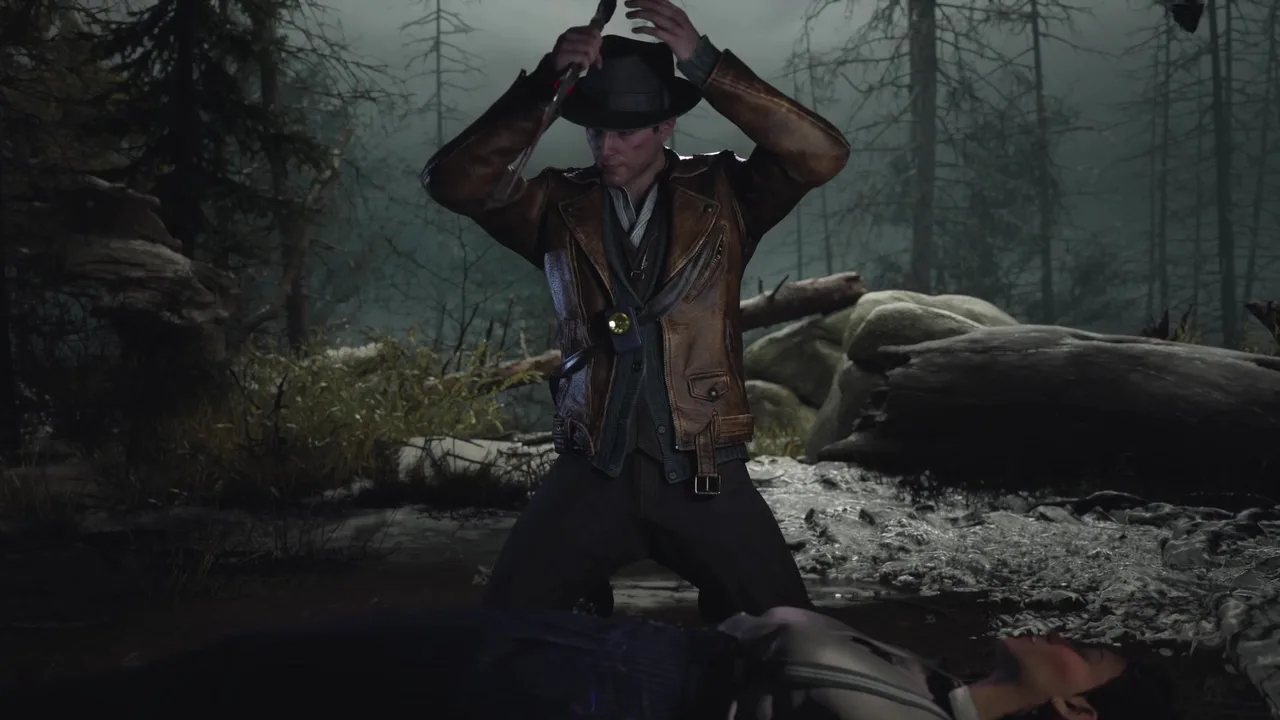
You made it past the first hour. You have a boat, a handful of bullets, and a growing suspicion that Arkham wants you dead. Now comes the part where you stop dying every ten minutes and start dying every thirty — and eventually, ideally, stop dying altogether.
The survival systems in The Sinking City 2 aren’t complicated individually. Light, sound, line of sight, healing, saving — these are familiar survival horror building blocks. But TSC2 layers them together in ways that punish sloppy habits fast. This guide breaks down each system and, more importantly, how they interact.
The Three Pillars of Detection
Enemies in TSC2 don’t just wander around waiting to bump into you. Based on the demo and preview footage, hostile creatures use a layered detection model built on three inputs: light, sound, and line of sight. Understanding how each one works — and how they combine — is the foundation of staying alive.
Light: Your Flashlight Is a Weapon and a Liability
Your flashlight is the most important tool you carry. In the waterlogged, power-dead interiors of Arkham, it’s often the only way to see what’s ahead of you. It also reveals supply caches, clue objects, environmental hazards, and — yes — enemy weak points.
The problem is that light works both ways.
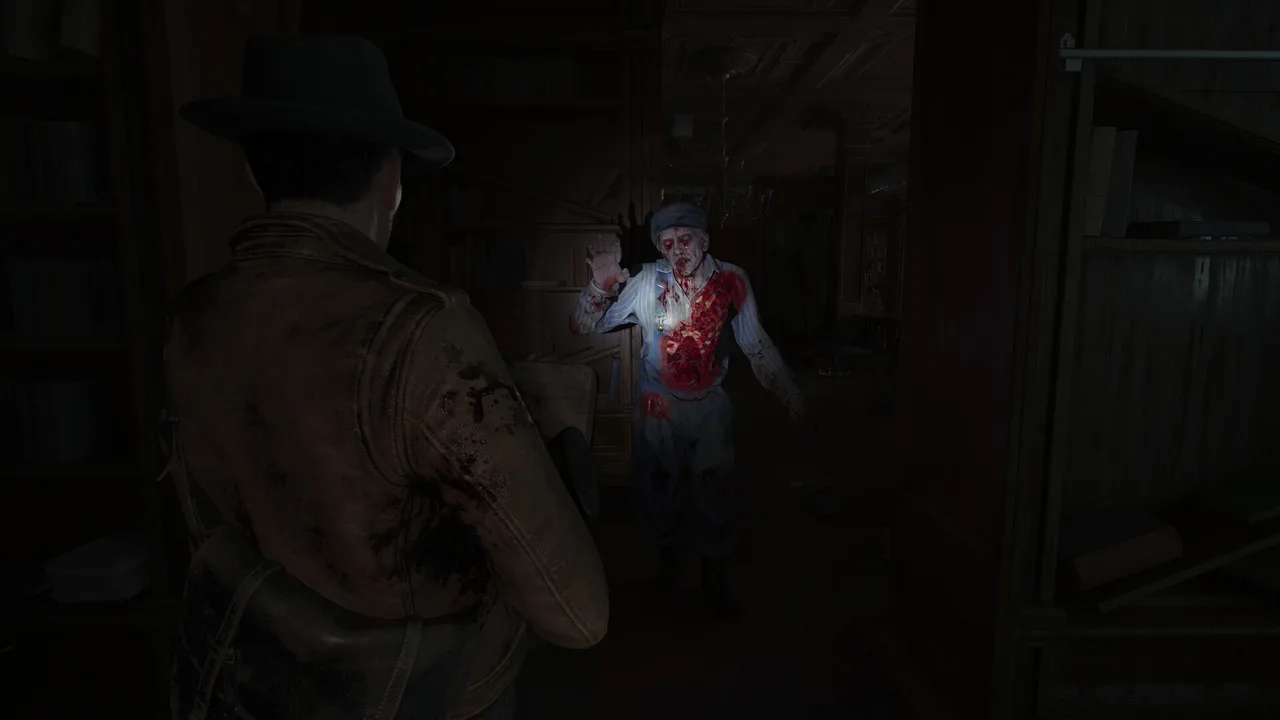
Certain enemies react to light. Not all of them — the Deep Ones seem to rely more on sound and vibration — but some creatures, particularly the reality-bending shadows, appear to activate or aggravate when hit with direct light. The demo showed at least one encounter where keeping the flashlight off was the correct play.
Practical flashlight rules:
- Sweep, don’t stare. Quick sweeps of a room reveal layout and threats without holding the beam on any one spot long enough to trigger a reaction.
- Turn it off when you’re not using it. This sounds obvious. You will forget constantly. Build the habit early.
- Ambient light is your friend. Windows, candles, emergency lighting, phosphorescent growths — any existing light source is a free alternative to your flashlight. Navigate toward ambient light whenever possible.
- Some enemies have visible weak points that only show under flashlight. This creates a genuine dilemma: you need the light to fight effectively, but the light is what’s making the fight harder. Knowing when to flash-and-fire versus staying dark is a skill you’ll develop through play.
Sound: Every Footstep Is Information
Sound design in TSC2 is doing double duty. It’s building atmosphere — the creaking of waterlogged timber, distant splashing, something breathing in the walls — but it’s also a mechanical system. You make noise. Enemies hear noise. More noise means faster detection.
What generates sound (from most to least):
| Action | Noise Level | Notes |
|---|---|---|
| Sprinting | Very High | Avoid in hostile areas entirely |
| Gunfire | Very High | Every shot is a dinner bell for everything in the building |
| Breaking objects / opening stuck doors | High | Sometimes unavoidable — clear the area first |
| Walking (standing pace) | Medium | Default movement, audible at close range |
| Crouching / slow walk | Low | Your stealth stance — significantly quieter |
| Standing still | Minimal | Enemies can still detect you by sight or smell, but you’re acoustically invisible |
The water complicates things. Wading through flooded sections is inherently noisier than walking on dry ground. If a hallway is half-submerged, you’re making more sound than you think. Crouch-walking through water is expected to be quieter but still louder than crouch-walking on a dry surface.
Gunfire is the big one. Firing a weapon doesn’t just hurt the thing in front of you — it tells every enemy within a significant radius exactly where you are. This is why the combat guide emphasizes avoiding fights when possible. Even winning a fight can be a net loss if the noise pulls more enemies to your position.
Line of Sight: What They Can’t See Can’t Hurt You
The third detection vector is plain visibility. Enemies need to see you to actively pursue you. Breaking line of sight — ducking behind furniture, turning a corner, closing a door — can shake a pursuing enemy or prevent detection entirely.
A few things to understand about how sight works in TSC2:
- Enemies have a forward-facing detection cone, not 360-degree awareness. Approaching from behind or the side is dramatically safer than approaching head-on.
- Closing doors breaks line of sight and can buy you critical seconds. Some enemies can break through doors, but it takes them time. Time you can use to create distance, find cover, or set up a shot.
- Elevation matters. If you’re above or below an enemy’s eye line — on a staircase, on a ledge, in a partially collapsed floor — you’re harder to spot even at relatively close range.
- The Slither are an exception. Based on the demo, the Slither — the animated dead — seem to have erratic detection patterns. They don’t always look where you’d expect. Treat them as unpredictable.
How the Three Systems Combine
Here’s where it gets interesting. These aren’t three separate switches — they’re three dials that feed into a single “how aware is this enemy” meter.
A creature in a dark room with its back to you, while you crouch silently: almost zero detection risk. That same creature if you’re sprinting with your flashlight on: immediate detection.
But the gray areas are where the survival skill lives. Crouching in moderate ambient light while slowly moving forward — you’re quiet and relatively hidden, but if the creature turns around, your visibility spikes. Walking at normal pace in total darkness with the flashlight off — you’re invisible but making enough noise that anything nearby will start investigating.
The game expects you to constantly balance these inputs. There’s no single “stealth mode” button that makes you safe. You’re always managing a spectrum.
Stealth: Moving Through Hostile Spaces
Putting the detection systems together, effective stealth in TSC2 looks like this:
- Enter a new area slowly. Stop at the threshold. Listen. Look for movement.
- Identify light sources. Where’s the ambient light? Where are the dark zones? Plan a path that uses existing light and avoids needing your flashlight.
- Crouch by default in any area where you suspect enemies. The noise reduction is significant.
- Peek around corners rather than walking into open rooms. If you can see the room before the room sees you, you’ve already won half the encounter.
- Map your retreat before you advance. Know where the last door is. Know which direction the boat is. If things go wrong, you need a plan that doesn’t involve standing in the open thinking about it.
Stealth isn’t always possible. Some encounters are scripted to force combat. Some areas are too flooded to move quietly. Some enemies detect you through means the flashlight/sound/sight model doesn’t fully explain — the cosmic horror elements of TSC2 occasionally override the mechanical rules, which is unsettling by design.
Healing: Scarce and Precious
Healing in TSC2 is not like healing in an action game. You don’t regenerate. Health pickups are rare. Crafting healing items requires materials you could also use for ammunition. Every point of damage you take has a lasting cost.
Healing principles:
- Avoid damage rather than healing through it. This sounds trite, but it’s the core philosophy. A fight you avoid is health you keep. The resource management guide covers the math on this in detail.
- Don’t heal mid-combat unless you’re about to die. Healing takes time. That time leaves you vulnerable. Finish the fight (or escape it), then heal in safety.
- Heal fully when you do heal. Partial healing wastes items. If you’re going to spend a healing resource, make sure it counts by using it when you’re low enough to get the full benefit.
- Prioritize healing items over ammo in crafting when both are low. You can sneak past enemies. You can’t sneak past a health bar that hits zero.
Based on survival horror conventions, the game likely uses a tiered health system — bandages for light wounds, more advanced items for serious injuries. Specific healing items and their crafting recipes will be documented in the crafting and repair system page once the full game releases.
Saving: Don’t Trust Autosave
The exact save system in TSC2 hasn’t been fully detailed, but based on the demo and genre conventions, expect something like this: limited manual saves at safe locations combined with periodic autosaves at story checkpoints.
The autosave system is not your friend. It saves at scripted moments, not when you want it to. You can lose significant progress if you rely on autosave alone.
Save habits that prevent grief:
- Save every time you reach a safe room or save point. Even if you just saved five minutes ago. Especially if you just saved five minutes ago.
- Save before entering a new area. That door with the strange markings? Save first. That staircase leading down into water? Save first.
- Save after finding significant resources. If you just found a stash of ammunition or a key item, lock that progress in.
- Rotate save slots if the game allows multiple manual saves. Don’t overwrite the same slot repeatedly — you might need to roll back to an earlier state if you’ve painted yourself into a corner with low resources.
Reading a Room: The Habit That Changes Everything
This is the single most important survival skill in TSC2, and it’s not a game mechanic — it’s a player skill.
Before you enter any room, stop. Take three seconds. Ask yourself:
- What can I hear? Movement? Breathing? Water disturbance? Nothing (which is sometimes worse)?
- What can I see from here? Use a quick flashlight sweep from the doorway. Check the corners, the ceiling, the far wall.
- How many exits does this room have? One entrance means one exit — which means getting cornered is a real risk.
- Is there cover? Furniture, pillars, overturned tables — anything you can break line of sight with.
- What’s the floor? Dry, damp, flooded? This tells you how much noise you’ll make moving through.
- Is this room worth entering? Not every room has supplies. Not every room is safe. Sometimes the smart play is to keep walking.
This habit — pausing at thresholds, reading the space, planning your entry — will save your life more than any weapon or healing item. Veteran survival horror players do this instinctively. New players sprint through doorways and die. Don’t be the second kind.
Environmental Hazards Beyond Enemies
Enemies aren’t the only threat in drowned Arkham. The environment itself is hostile:
- Unstable floors and structures: waterlogged buildings collapse. If a floor looks damaged or a ceiling is sagging, move through quickly or find another path.
- Rising water: the flood is dynamic. Water levels can change, cutting off retreat paths or revealing (and submerging) new areas. Keep an awareness of water level in any room you’re exploring.
- Darkness itself: prolonged time in total darkness without a light source is expected to affect your sanity system. The sanity management guide covers this in detail, but the short version is: don’t linger in the dark longer than you need to.
- Contaminated water: some flooded areas may cause damage over time when you wade through them. If the water looks wrong — discolored, faintly luminescent, unnaturally still — avoid standing in it.
Putting It All Together: A Survival Checklist
When you dock your boat and step into a new building in Arkham, this is your mental checklist:
- Listen at the entrance for thirty seconds
- Quick flashlight sweep — then off
- Identify the nearest cover and the exit behind you
- Crouch and advance slowly
- Loot systematically — near items first, deeper rooms after clearing
- If you hear something, stop moving and turn off the light
- Decide: fight, sneak past, or retreat to the boat
- Save if a save point is available
- Move on
It’s not glamorous. It’s not heroic. But Arkham doesn’t care about heroes. It cares about what you brought and whether you can keep your head. Everything else — the story, the investigation, the cosmic horror — is built on top of this foundation.
Stay low. Stay quiet. Stay alive.
Related Guides
- Beginner’s Guide — if you haven’t started yet, start here
- Combat Guide — for when stealth fails and you have to fight
- Resource Management — the economics of survival
- Sanity Management — keeping your mind intact while the world falls apart
Frequently asked questions
Does the flashlight attract enemies in The Sinking City 2?
Based on the demo, yes — your flashlight appears to draw the attention of certain enemies. Some creatures react to light directly, while others seem to track the sound of your movement instead. Using the flashlight selectively is a core survival skill.
Can you save anywhere in The Sinking City 2?
The game is expected to use a hybrid system with manual saves at safe locations and periodic autosaves. Based on survival horror conventions, save points may be limited, so saving frequently when you find one is highly recommended.
How does stealth work in The Sinking City 2?
Stealth in TSC2 revolves around three detection systems: light exposure, sound generation, and line of sight. Crouching reduces your noise, turning off your flashlight makes you harder to spot, and breaking line of sight behind cover can let you lose pursuing enemies.