The Slither
Animated Dead
A full breakdown of the Slither in The Sinking City 2 — animated dead that shamble through Arkham's ruins. Weak points, tactics, and lore.
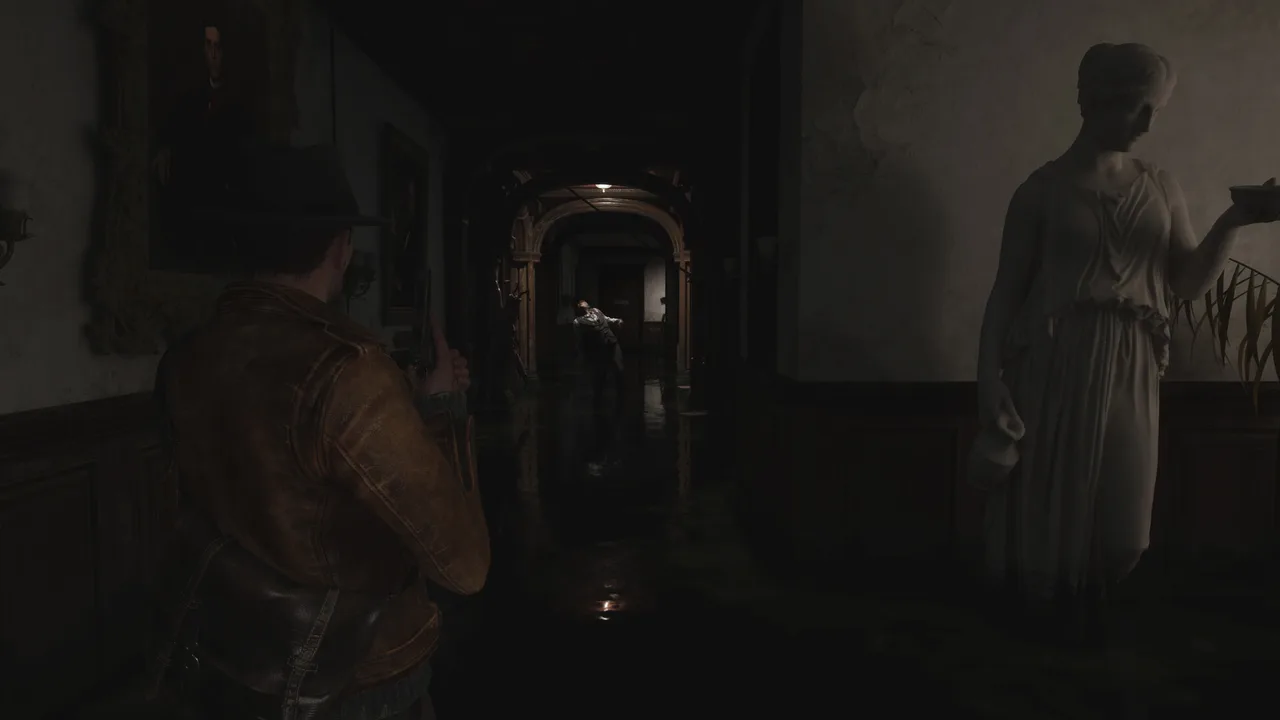
It moved like something was wearing the body wrong — too many joints bending the wrong way.
The Slither is what happens when something from outside decides a human corpse still has uses. Frogwares has confirmed these as one of TSC2’s core enemy types, and from what we’ve seen in previews, they’re the game’s bread-and-butter interior threat — the thing waiting in dark hallways, the shape you thought was just a body until it lurched upright.
Don’t confuse them with zombies. They’re worse than zombies, because whatever is moving them doesn’t care about the body’s original limitations.
Lore
The name is the giveaway. Something slithers into the dead — some tendril or force of eldritch origin that puppets the corpse from within. In Lovecraftian fiction, this falls somewhere between reanimation and parasitic possession, and TSC2 leans hard into the body-horror of it.
Arkham after the flood is a city full of the dead. People drowned in their homes, in the streets, in hospitals that flooded from the basement up. The Slither turns that mass death into a resource. Every corridor you walk through that has a body on the floor is a potential encounter, because not every body is finished moving.
Preview notes suggest the animating force is visible — a dark, vein-like tendril that threads along the corpse’s spine, neck, or limbs. The body itself is just a vehicle. This matters mechanically, because it means traditional “aim for the head” logic doesn’t apply the way you’d expect.
The first Slither encounter in the demo is reportedly one of the game’s early scare moments — a body you walk past that reanimates behind you. Classic survival horror pacing, and it trains you to never trust a room you’ve already cleared.
Behaviour
Slithers are melee-focused. They shamble, lurch, and lunge. Their movement is unsettling precisely because it’s wrong — limbs bending at angles a living person couldn’t manage, sudden bursts of speed from a body that was dragging itself a moment ago.
They’re individually not that dangerous. A single Slither in an open space is manageable. The danger comes from three things: numbers, ambush positioning, and the fact that they play dead.
In groups, Slithers overwhelm. They come from multiple directions, and their erratic movement makes it hard to track all of them at once. Tight interiors — hallways, stairwells, cramped apartments — are where they’re most lethal, because you can’t create distance.
The playing-dead behavior is their nastiest trick. You’ll enter a room with two or three bodies on the floor. One of them is a Slither. Maybe two. You won’t know which until they move, and by then they’re already close. Learn to watch for the tells: subtle twitching, a limb positioned at an unnatural angle, the faint dark lines of the animating tendril.
How to fight it
Forget the head. Or rather, don’t only aim for the head.
Headshots stagger a Slither, which is useful for buying time, but they don’t reliably kill. The body isn’t running on a brain anymore — it’s running on whatever that tendril is. Your real target is the animating tendril itself. Look for the dark, vein-like growth along the spine, the neck, or sometimes wrapped around a limb. Hitting it directly is an instant kill.
This is easier said than done in a dark hallway with three of them lurching at you. Practically, the tendril shot is your opener — if you spot a Slither before it attacks, take a moment to identify the tendril and place your shot. One bullet, one kill. That’s the efficient approach, and in a game with scarce ammo, efficiency matters.
When you’re ambushed or outnumbered, switch tactics. Headshot to stagger the nearest one, create distance, then pick your shots. Melee is viable against single Slithers if you can time your dodge against their lunge — they have a clear wind-up animation before their grab attack. But don’t try to melee a group. You’ll get surrounded.
Fire-based throwables are effective against clusters. A single molotov in a narrow hallway can catch multiple Slithers and destroy the tendrils through sustained damage, even if you can’t see them individually.
Keep your flashlight ready. Slithers favor dark interiors, and you need the light to spot both the tendrils and the “playing dead” tells. A dark room full of bodies is a puzzle you solve with your flashlight before you solve it with your gun.
Where you’ll meet it
Everywhere indoors. Slithers are the interior counterpart to the Deep Ones’ aquatic territory. Ruined apartments, flooded basements, hospital wards, warehouses, the back rooms of Arkham’s speakeasies — any place with corpses and low light is Slither territory.
The demo’s early encounters place them in a partially collapsed building, teaching you the basic combat loop: enter a room, scan for bodies, identify threats, engage. Later encounters reportedly layer in more complex setups — rooms where some Slithers are already standing and others are playing dead among actual corpses, forcing you to triage threats in real time.
Expect them throughout the entire game. They’re the common enemy, the thing that keeps indoor exploration tense even when you’re not facing a boss or dealing with sanity deterioration. The Slither is TSC2’s way of making sure you never feel safe putting your gun away.