Downtown Arkham
The Drowned Heart of the City
Downtown Arkham in The Sinking City 2 — the flooded Art Deco commercial core, speakeasies, and street-level combat in a drowned 1920s city.
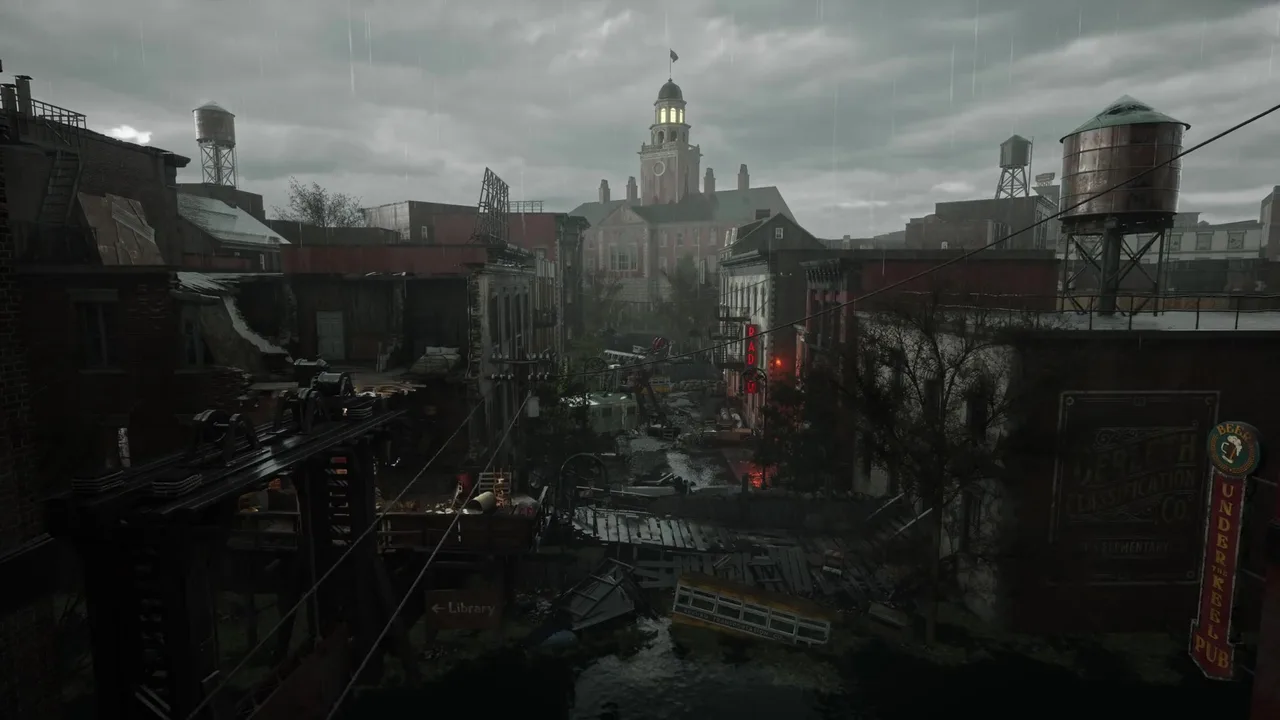
The marquee lights still flicker sometimes. Nobody's sure if that's the wiring or something worse.
Downtown Arkham is the city’s Art Deco heart, and the flood stopped it mid-beat. This was the commercial core — department stores with brass-framed revolving doors, a cinema with a terrazzo lobby, banks with marble columns, the kind of ambitious 1920s architecture that small New England cities built when they wanted to feel bigger than they were. The flood filled the ground floors with black water and left the upper stories sticking out like headstones.
It’s gorgeous in the worst possible way.
What You’re Walking Into
Downtown is vertical in a way the Harbor isn’t. The water sits at roughly street level, sometimes higher, sometimes lower depending on the flood system’s tidal cycles. That means ground-floor shops, lobbies, and passageways are submerged or semi-submerged, but upper floors — accessed via fire escapes, collapsed walls, or interior staircases that rise above the waterline — are dry and explorable.
This creates a layered district. You dock your boat on a flooded avenue, wade or swim to a building entrance, then climb. The transition from water to air, from the muffled acoustics of flooded spaces to the creaking silence of dry upper floors, is one of the game’s most effective mood shifts based on preview footage.
The street grid is still partially legible — you can trace where Main Street was, where the intersections fell — but debris, collapsed facades, and floating wreckage block obvious paths constantly. Navigation is less about knowing the map and more about reading the rubble. A broken fire escape on your left might be the only way to cross a flooded block that’s too deep to wade.
The Speakeasies
Prohibition makes the speakeasies Arkham’s real social infrastructure. Before the flood, they were hidden. Now they’re essential — the few dry, defensible, lamp-lit spaces where survivors gather to trade, talk, and pretend things are normal for an hour.
Expect them to function as safe zones and quest hubs. The speakeasy NPC shown in official screenshots — that weathered figure in the feather-trimmed coat beside a ship’s wheel — looks exactly like the kind of character who knows more about what happened to Arkham than they’re willing to share for free. Bring something worth trading, and the information flows.

These locations are also where you’d expect to find the investigation system at its richest. Conversations, overheard rumors, documents left on bar tops, a name scratched into a wall. Downtown’s density means clues are everywhere, if you’re paying attention.
The Flood’s Fingerprints
The water didn’t treat everything equally. Some buildings held — the ones with good foundations, thick walls, steel frames. Others crumbled. You can see it in the skyline: a hotel with its upper four stories intact next to a department store that’s just a shell, its facade peeled off to expose flooded interior floors like a cross-section diagram.
What’s eerie is the preservation. Floodwater rose fast enough that shop interiors froze in place. Display cases still hold merchandise behind cracked glass. A cinema’s marquee still lists a showing. Office desks sit in neat rows on second floors while the floor below is six feet of murky water. It’s the domestic uncanny — everything in its right place, except the world ended.
The water itself behaves strangely downtown. It pools in places it shouldn’t. Puddles on upper floors with no obvious source. Damp patches that spread across walls in patterns that look almost deliberate, almost like writing. The supernatural flood left marks here that go beyond simple inundation.
Threats on Every Floor
Downtown is Slither territory. The Slithers — animated dead, reanimated by whatever force drives the flood — thrive in the kind of cluttered, shadowy environments that downtown provides. Flooded lobbies, dark stairwells, the back corridors of ruined shops. They’re not fast in the way Deep Ones are fast, but in a confined space full of overturned furniture and blind corners, speed matters less than proximity.
You’ll hear them before you see them, usually. A wet dragging sound. Something shifting behind a counter. The creak of weight on a floor above you that should be empty.
Cultists are the other major threat. Downtown’s density makes it attractive to human factions who want territory — groups that see the flood as a divine event, who’ve organized around whatever eldritch force is reshaping Arkham. They’re armed, they’re purposeful, and they don’t appreciate investigators poking around their operations.
Structural collapse is the silent hazard. Waterlogged buildings fail without warning. A floor that held your weight going in might not hold it coming out. A wall shifting in the current can redirect water into a space you thought was dry. Always have a second exit in mind.
Why Downtown Matters
Resources and information. Downtown was where Arkham’s wealth concentrated, and some of that wealth is still sitting in safes, behind locked office doors, in the stockrooms of shops that never got looted because the water rose too fast. Ammunition, medical supplies, upgrade materials — the scavenging here is expected to be richer than the harbor, but proportionally more dangerous.
The investigation system likely hits its stride downtown. This is the district with the most human history layered into every building — records, correspondence, ledgers, photographs. If you’re trying to piece together what caused the flood and how to find the person you’re looking for, downtown Arkham is where the threads converge.
And there’s something about seeing those Art Deco facades — all that ambition and elegance — half-swallowed by dark water that hits harder than any creature encounter. The city was beautiful once. You can still see it. That’s what makes it hurt.