The Harbor
Tide-Drowned Docks
The Harbor district in The Sinking City 2 — Arkham's drowned docklands where every boat journey begins and the flood never fully lets go.
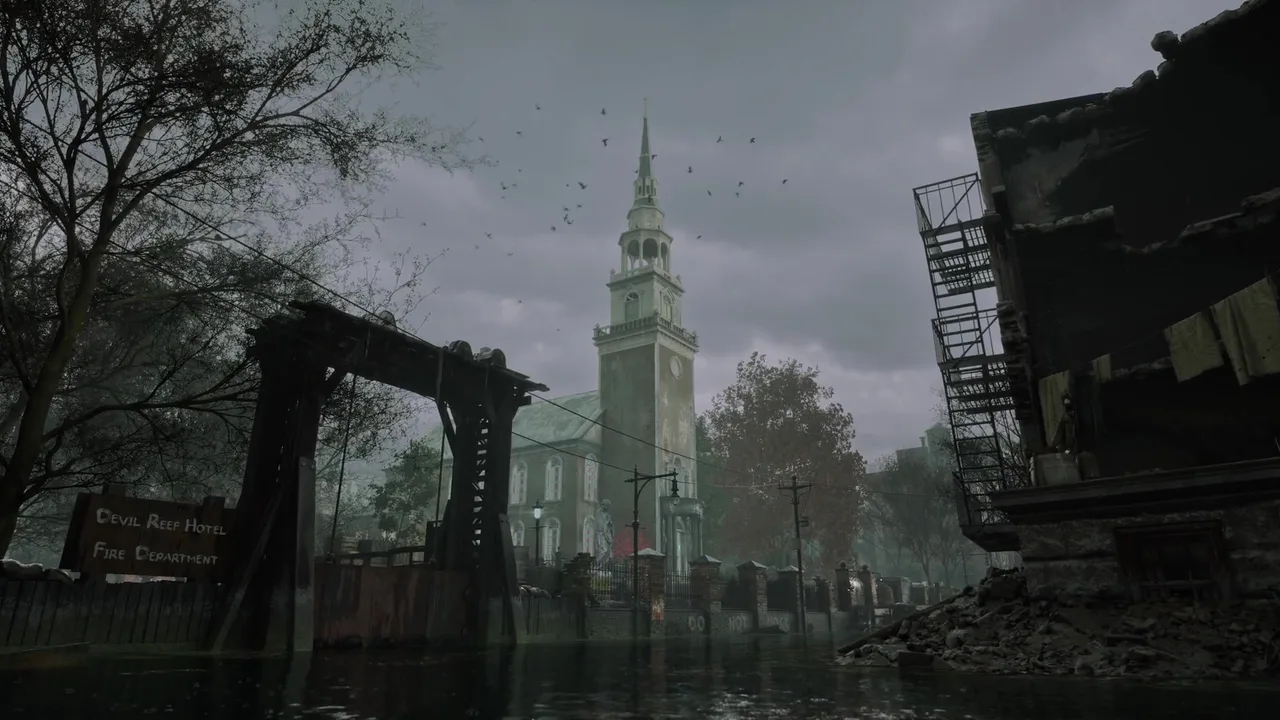
Every trip starts at the docks. Most of them end there too — just not the way you planned.
The Harbor is where Arkham meets the water on its own terms — or at least, where it used to. Before the flood, this was a working waterfront: fishing trawlers tied up alongside cargo barges, crab pots stacked on tarred planks, the kind of salt-stained industry that kept a small New England town breathing. Now it’s the threshold between what’s left of civilization and the drowned unknown stretching out past the breakwater.
If you’re going anywhere in The Sinking City 2, you’re coming through here first.
The Lay of the Land (and Water)
The Harbor occupies Arkham’s eastern shoreline, or what we’d expect to be the eastern shoreline based on Lovecraft’s geography and the demo’s map glimpses. Think long stone piers jutting into murky brown water, warehouse roofs poking above the flood line, channel markers listing at bad angles. The flood system keeps things unpredictable — a walkway that was dry an hour ago might be ankle-deep now, and vice versa.
Your boat lives here. The small rowboat you use to navigate between Arkham’s districts launches from the Harbor’s main dock, and this is where you’ll return between excursions. That makes the Harbor a kind of hub, even if it’s not safe in any meaningful sense. It’s just the least hostile option.
The district seems to stretch from a cluster of fishermen’s shacks and bait houses in the north down to larger commercial piers and a customs house toward the south. Warehouses line the inner edge, most of them partially flooded, their loading doors gaping open onto black water. A few fishing boats sit half-sunk at their moorings, decks tilted at angles that suggest they’ll never sail again.
What the Flood Did
The Harbor was always wet. That’s the cruel irony — a waterfront district should handle rising water better than anywhere else. But the supernatural flood didn’t just raise the tide a few feet. It changed what the water is.
The piers that survived structurally are still standing, but the water around them doesn’t behave normally. Tidal patterns are wrong. The demo’s environmental details hint at water that rises against the wind, currents that reverse without explanation, foam with a faintly iridescent sheen that no natural ocean produces. Whatever drowned Arkham, it wasn’t a storm surge.
Warehouses that sat comfortably above the old high-water mark now have their ground floors permanently submerged. Cargo that was stored inside — canned goods, rope, fuel, ammunition — is either ruined or scattered across the flooded interior, which makes these buildings tempting scavenging targets and extremely dangerous ones. Confined, flooded, dark. Everything the Deep Ones love.
Who and What You’ll Find
The Harbor still has people, barely. Fishermen who refused to evacuate, dockworkers with nowhere else to go, the occasional smuggler running supplies between survivors. These NPCs are expected to serve as early-game contacts — quest givers, traders, sources of local information about what’s happening in deeper districts.
Don’t expect friendliness as a default. Arkham’s survivors are frightened and territorial. A stranger arriving by boat might get directions, might get a warning, might get a shotgun pointed at their chest. The 1920s setting layers in its own tensions — Prohibition means the speakeasies in downtown Arkham are the social infrastructure, and the Harbor’s smuggling networks probably feed them.
As for threats, the Harbor sits at that uncomfortable boundary where human dangers and inhuman ones overlap. Desperate survivors might ambush you for your supplies. But the real escalation happens near open water. The further you move from the dock toward the harbor mouth, the more likely you are to encounter aquatic creatures. Deep Ones patrol the deeper channels, and the broken pilings of the outer piers provide perfect ambush cover.
Hazards Worth Knowing
Tidal shifts can strand you. If the flood system drops the water level while you’re exploring a flooded warehouse, you might find yourself in a newly exposed basement with no quick exit — and whatever was swimming in that water is now flopping around at your feet. Conversely, a rising tide can cut off a path you used to get in.
The underwater visibility here is terrible. Harbor water is silty, oily, full of debris. If you end up submerged — and you will — you can barely see your hand in front of your face, let alone a Deep One closing from below.
Structurally, the piers are unreliable. Waterlogged wood, rusted bolts, planks that look solid until you step on them. Falling through a pier into the water below isn’t just embarrassing — it’s potentially fatal if something’s waiting.
Why You’d Come Here
Because you have to. The Harbor is your lifeline. It’s where the boat docks, where you resupply, where you pick up information about conditions in other districts. Even after you’ve unlocked routes to the submerged quarter or the outer shore, you’ll keep coming back to the Harbor as your base of operations.
But beyond necessity, the Harbor is worth exploring for its supply caches. Warehouses, shipping containers, the holds of beached boats — the waterfront was where goods came into Arkham, and some of that cargo is still here, waterlogged but usable. Ammunition, crafting materials, maybe medical supplies from the customs house. The boat navigation guide will likely map optimal routes between the Harbor and other districts, but early on, just poking around the docks themselves can net you enough resources to survive your first few excursions.
The Harbor smells like brine and diesel and rot. The water slaps against the pilings in a rhythm that’s almost natural, almost right. It’s the safest place in drowned Arkham, which tells you everything about what lies beyond it.