Boat Navigation Guide — Getting Around Flooded Arkham
How to navigate The Sinking City 2's drowned districts by boat — docking, map reading, fuel, hazards, and tips for surviving Arkham's flooded streets.
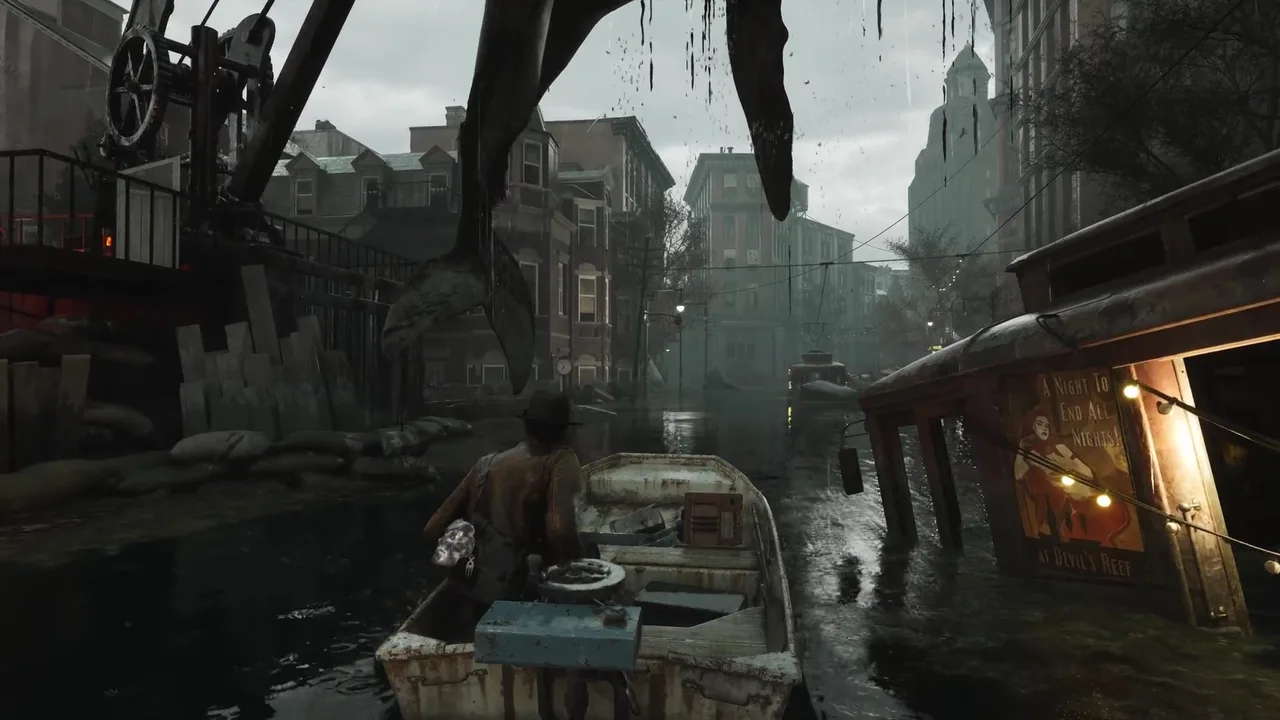
Arkham is underwater. Not metaphorically, not in patches — the supernatural flood that drives The Sinking City 2’s horror has turned city streets into canals, lobbies into pools, and entire neighborhoods into something between Venice and a nightmare. Your boat isn’t a gimmick or a fast-travel alternative. It’s how you move through the world.
Getting comfortable with boat and navigation is one of the first things the game asks of you, and based on the prologue demo, it stays central throughout. Here’s everything we know about how waterborne travel works — and how to use it without getting yourself killed.
Why the Boat Matters
In most survival horror games, you walk. Maybe you run. The environment is fixed, and mastering it means memorizing hallways. The Sinking City 2 breaks that pattern by putting half its world underwater and handing you a small boat.
This changes the rhythm of the game fundamentally. When you’re on the boat, you’re exposed — visible from every angle, limited in your ability to fight, and vulnerable to anything lurking below the surface. But you’re also mobile. You can cover distance that would be impossible on foot, reach districts that are completely cut off by water, and escape situations that would be deadly in a corridor.
The tension lives in the transition points. Getting from dock to dock is one kind of challenge. Stepping off the boat into a half-drowned building is another. The game is built around that push and pull between the relative openness of the water and the claustrophobic danger of Arkham’s interiors.
The Boat Itself
From demo footage and preview materials, the boat is a small, low-profile watercraft — something between a rowboat and a skiff. It’s not motorized in any dramatic way; movement through the water feels deliberate and measured rather than fast.
A few things stand out from what’s been shown:
It’s persistent. The boat appears to stay where you dock it. You aren’t spawning new boats — you’re returning to where you left yours. This means docking decisions have consequences. Park at the wrong spot, and you might have a long, dangerous walk back.
It handles differently depending on conditions. The demo shows the boat responding to current, debris, and water depth. Narrow passages between buildings feel tight and require careful steering. Open waterways give you more room but potentially more exposure to threats.
It’s not a combat platform. While you’re on the boat, combat options appear limited. You might be able to take a shot at something, but the boat is primarily about movement, not engagement. If something hostile appears in the water, your best option is usually to get to a dock rather than fight from the hull.
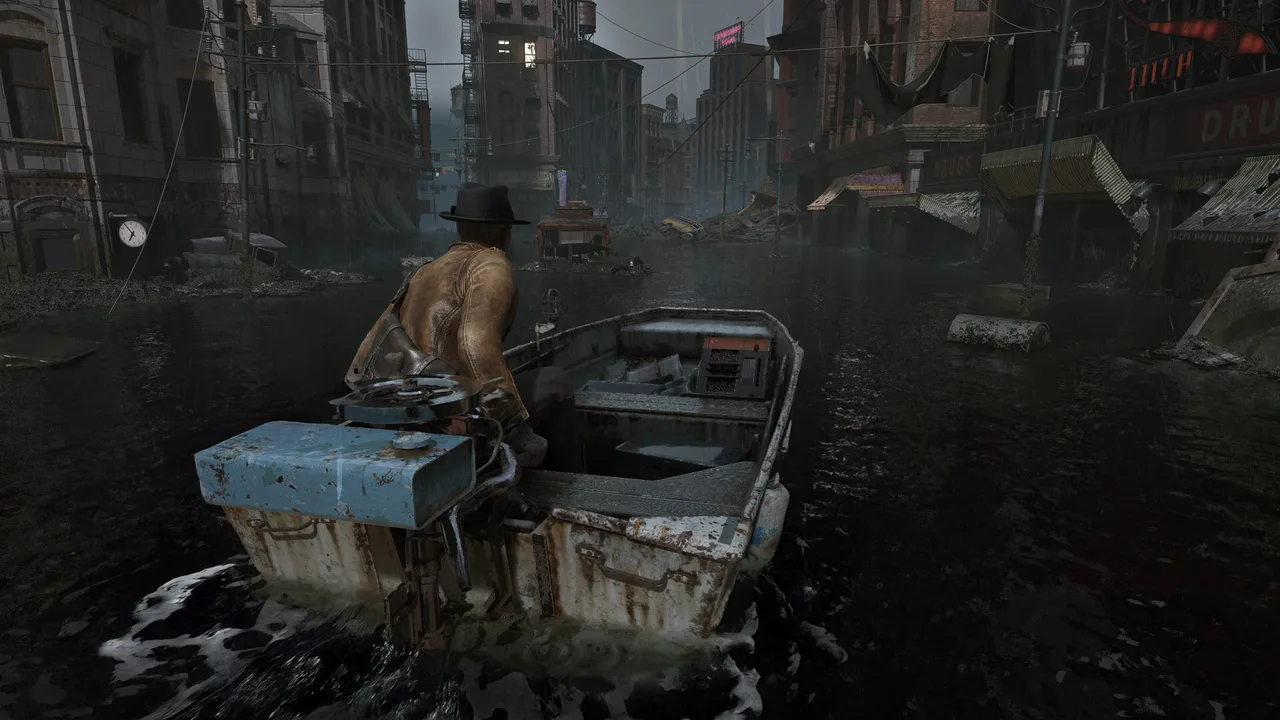
Docking and Transitioning to Foot
Docking points are scattered across Arkham’s districts — specific spots where the water meets a structure solid enough to tie off and step out. Based on the demo, docking involves pulling the boat alongside a platform, pier, or partially submerged staircase and exiting.
A few practical notes from the demo:
Not every waterside structure is a dock. You can’t just pull up to any building and hop out. Designated docking points exist for a reason — they’re the spots where the water level, structural integrity, and level design converge to let you transition safely. Learning where the docks are in each district is essential for planning your routes.
Docks serve as orientation points. When you’re exploring a district on foot and things go sideways — resources running low, enemies closing in — your mental map of the nearest dock becomes critical. Getting back to the boat is your escape valve, and knowing the fastest path to water can be the difference between retreating successfully and getting cornered.
Some docks connect to specific building interiors. Not all transitions from water to land go through open streets. Some docking points lead directly into buildings — a flooded lobby, a warehouse loading bay, a canal entrance that opens into a basement. These transitions tend to be tighter and more dangerous, but they also provide access to areas you can’t reach from the surface.
For a deeper look at The Harbor district specifically — likely your first major docking area — check its dedicated page.
Reading the Map
The Sinking City 2 includes an in-game map that’s essential for boat navigation. Based on the demo’s investigation board UI, the map shows Arkham’s district layout with the following key information:
Flood zones. The map displays which areas are fully submerged, partially flooded, and relatively dry. This directly impacts your route planning — fully submerged zones are boat-only, partially flooded areas require mixed travel, and dry zones (what’s left of them) are foot-only.
Docking points. Marked on the map, these show you where you can transition between boat and foot. Not all docks are immediately available; some may need to be discovered through exploration first.
Key landmarks. Buildings, structures, and points of interest are marked as you discover them. These help you orient yourself in a city that can feel disorienting when everything’s waterlogged and the familiar reference points of streets and sidewalks are gone.
District boundaries. Arkham is divided into distinct areas, each with its own character, threat level, and flood conditions. The map shows where one district ends and another begins, which matters because crossing between districts often means crossing open water.
One thing the demo makes clear: the map is not a GPS. It gives you the layout, but it doesn’t trace optimal routes or warn you about every hazard. You need to read the water yourself — check for debris, currents, and the subtle signs that something isn’t right below the surface.
Fuel, Maintenance, and Upkeep
This is an area where we need to be upfront about what we don’t know. Frogwares hasn’t detailed whether the boat requires fuel, repairs, or any form of mechanical upkeep. Given the game’s survival horror identity and emphasis on resource scarcity, some form of boat maintenance would fit perfectly — but it’s not confirmed.
Here’s what we’d expect based on the game’s design philosophy:
Some resource cost for travel. The game is built around scarcity. It would be unusual for the primary traversal method to be completely free. Whether that’s fuel, repair materials, or some other consumable, anticipate that boat travel has a cost.
Risk-reward in route planning. If travel has a cost, then choosing the shortest route versus the safest route becomes a meaningful decision. A direct path across open water might save resources but expose you to threats. A longer path hugging buildings might be safer but burn more fuel.
Possible breakdowns or damage events. Survival horror loves to take away your tools at the worst moment. A boat that can be damaged by debris, creature attacks, or the flood’s shifting currents would create exactly the kind of desperate improvisation the genre thrives on.
We’ll update this section as soon as Frogwares confirms the specifics. For now, plan as though the boat is a resource to manage, not a guarantee.
The Flood and How It Changes Navigation
The flood system is one of The Sinking City 2’s most distinctive features, and it directly impacts how you navigate. Water levels in Arkham are not static — they shift over the course of the game, dynamically changing what’s accessible and what’s submerged.
What this means for boat travel:
Routes open and close. A passage between two buildings that was navigable before might be blocked by risen water pushing debris into the gap. Conversely, a previously impassable route might open up as levels change elsewhere. Knowing one path through a district isn’t enough — you need alternatives.
Docks can become inaccessible. If water rises high enough, a dock that was at waterline might end up submerged. If it drops, a dock might be stranded above the water where you can’t reach it from the boat. This forces you to adapt your docking habits and maintain awareness of multiple access points per district.
New areas emerge. Shifting water can reveal structures, passages, and entire sections of Arkham that were previously underwater. These newly accessible areas often contain valuable resources, lore, and clues — rewarding players who pay attention to flood changes and revisit previously explored districts.
Hazards shift. The things living in the water move with it. An area that was relatively safe during low water might become dangerous when the flood brings Deep Ones closer to the surface. Paying attention to flood conditions isn’t just about route planning — it’s about threat assessment.
Navigating Safely — Practical Tips
Based on the demo and what previews have shown, here are some approaches that should serve you well on the water:
Stay close to structures when possible. Open water is exposure. Hugging the sides of buildings gives you cover, potential emergency docking spots, and reduces the angles from which something can approach you. The tradeoff is tighter navigation and more debris.
Listen to the water. The Sinking City 2’s sound design is excellent, and it carries over to boat navigation. Unusual sounds — gurgling beneath the hull, splashing from a direction you’re not moving, the groan of a structure about to shift — are warnings. Play with headphones and trust what you hear.
Plan your route before leaving the dock. Open the map, identify your destination dock, and trace a path before you push off. Fumbling with the map while you’re on the water in hostile territory is a good way to drift into trouble.
Keep track of where you parked. It sounds simple, but in a city this disorienting, losing your boat is a real risk. When you dock, note your surroundings — the building you’re next to, visible landmarks, the direction you approached from. Being able to retrace your steps to the boat under pressure is a survival skill.
Don’t fight from the boat unless you absolutely have to. If something engages you on the water, head for the nearest dock. Fighting from a moving, unstable platform with limited weapon access is almost always worse than fighting from solid ground. Get off the water, deal with the threat, then continue your journey.
Explore side channels. The main waterways between docks are obvious routes, but the flooded streets of Arkham are full of side passages — alleys, courtyards, gaps between buildings that are now narrow canals. These often contain loot, hidden docks, or shortcuts to areas you’d otherwise reach the long way. Refer to our exploration and secrets guide for more on finding hidden areas.
The Boat as Horror
One last thing worth noting, because it shapes the whole experience: the boat is scary. Not because of its mechanics, but because of what it represents. You’re sitting in a small vessel on water that shouldn’t be there, in a city that’s been drowned by something supernatural, and you cannot see what’s beneath you.
Every ripple might be the current. Every shadow under the surface might be a Deep One. Every building you pass might have something watching from a dark window. The boat puts you in the most exposed, most vulnerable position the game has — and it makes you go there willingly, because it’s the only way forward.
Frogwares understood that. The boat isn’t just transportation. It’s a horror delivery system.
For the mechanical breakdown of how the boat handles and its role in the wider game, see the boat and navigation system page. For information on how the shifting water affects everything else, check the flood system overview.
Frequently asked questions
How do you travel between districts in The Sinking City 2?
You travel by boat through Arkham's flooded streets. Each district has dock points where you moor the boat and continue on foot. The boat is your primary means of crossing the waterlogged city.
Can your boat be damaged or destroyed in The Sinking City 2?
Based on demo footage and previews, the boat appears to be a persistent vehicle rather than a consumable. Whether it takes damage or requires upkeep hasn't been fully confirmed — expect some form of maintenance or hazard avoidance given the game's survival horror focus.
Is there a map for boat navigation in The Sinking City 2?
Yes. The game includes an in-game map showing Arkham's flooded districts, docking points, and key landmarks. The map updates as you explore and is essential for planning routes between districts.