Boat Travel & Navigation in The Sinking City 2
Water-Based Traversal System
Everything about boat travel in The Sinking City 2 — navigating flooded Arkham by water, docking to explore on foot, and why the boat is your lifeline.
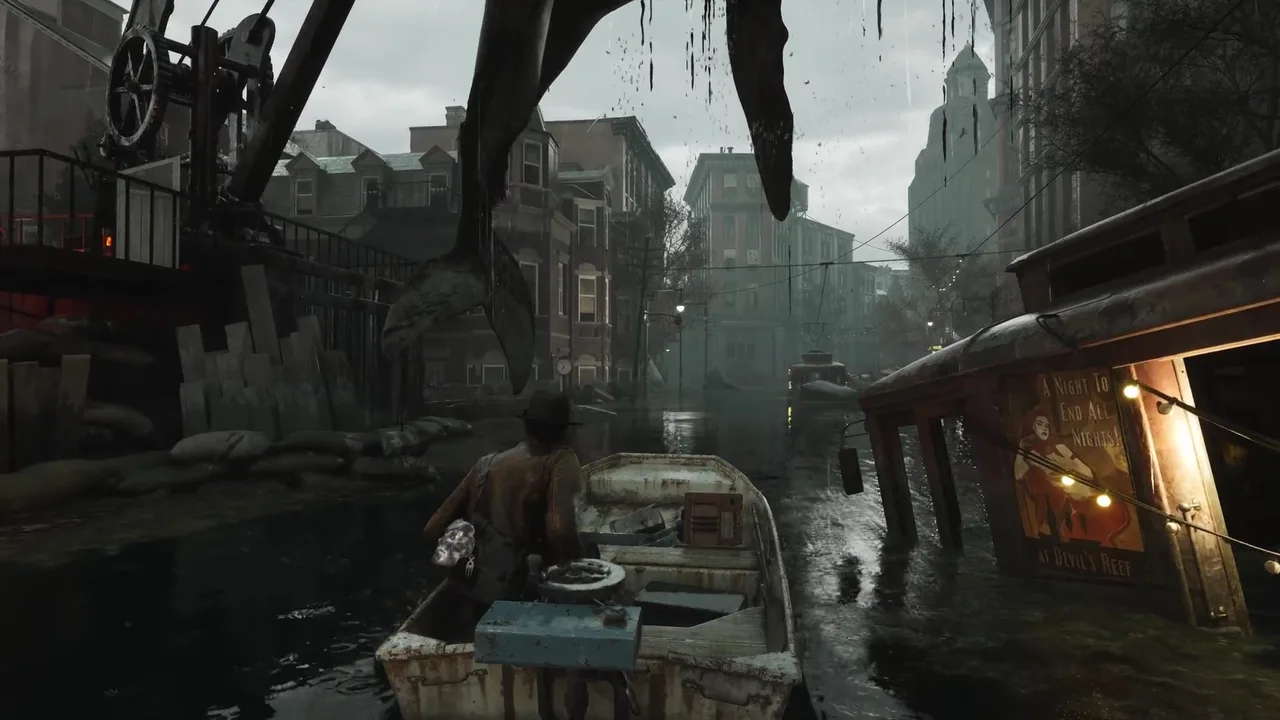
Arkham's streets are canals now. Your boat is the only thing between you and whatever lives underneath.
Arkham is underwater. Not metaphorically — the streets are flooded, the ground floors are submerged, and the only way to move between districts is by boat. This isn’t a gimmick or a set piece. The boat is your primary mode of transportation in The Sinking City 2, and the waterlogged cityscape is the connective tissue that holds the entire game together.
You row (or motor) through what used to be avenues. You dock at second-story windows and fire escapes. And sometimes, things bump against the hull from below.
How It Works
The boat system has been confirmed through multiple trailers and the prologue demo. You navigate a small vessel — it looks like a rowboat in some footage and something with a small motor in others — through Arkham’s flooded streets and waterways. The camera pulls to a wider angle during boat sections, giving you a view of the drowned architecture sliding past on either side.
Movement on water is straightforward: you steer and you go. The boat handles differently depending on the waterway — narrow passages between buildings require tighter maneuvering than open flooded plazas. Debris, collapsed structures, and the dynamic flood all affect which routes are passable. A street you sailed through an hour ago might be blocked by shifted wreckage or drained to mud.
Docking transitions you from water to on-foot exploration. Dock points appear at accessible ledges, balconies, rooftops, piers, and any structure that sits above the waterline. Once docked, you explore on foot — entering buildings, scavenging for resources, fighting or avoiding enemies, and investigating clues. When you’re done (or when things go sideways), you return to your boat and move on.
The semi-open structure means you aren’t locked into a linear path. Multiple docking points per district let you approach from different angles. If one dock leads you straight into a Slither den, you can get back in the boat and try a different entry point. The water itself is a kind of hub — a wet, unsettling hub where the buildings lean in too close and the fog cuts your sightlines short.
Why It Matters
The boat does three things for TSC2’s design that walking alone couldn’t.
First, it creates natural pacing. Boat travel is slower and quieter than running through corridors, which gives you breathers between intense on-foot sections. These moments aren’t empty — the atmosphere of rowing through drowned Arkham at night, passing submerged storefronts and flooded church steeples, is its own kind of horror. But it’s a different register. Dread instead of panic.
Second, it enforces the semi-open world structure. Frogwares has been clear that TSC2 isn’t a fully open sandbox — it’s more like a set of interconnected districts you can move between with some freedom. The boat is what makes that structure feel organic rather than arbitrary. You can’t walk between districts because the streets are underwater. You go by boat, and the routes available to you define your options.
Third, water is dangerous. Deep Ones live in it. Things move beneath the surface. The boat is protection — you’re above the waterline, out of reach — but it’s also exposure. You’re out in the open, visible, and if something big enough decides to care about your little vessel, you’re in trouble. Frogwares hasn’t detailed water-based combat in depth, but the trailers suggest that boat travel isn’t always safe passage.
The dynamic flood amplifies all of this. As water levels change throughout the game, your navigation options shift. A district that was accessible by boat might drain enough to walk into — or flood enough that your dock point is now underwater. Planning your route through Arkham becomes a constantly evolving puzzle.
Tips for Navigating Arkham’s Waters
Learn the landmark buildings. Flooded Arkham can look samey from water level — brown water, half-submerged facades, fog. Identifying distinctive buildings (the library, the church steeple, the fish market sign) helps you orient without pausing to check the map constantly.
Check multiple docks before committing. If a district has three docking points, scout them from the water before climbing out. Sound design matters here — if you hear enemy sounds from one direction, dock somewhere quieter.
Watch for flood changes. The flood system reshapes the map as you play. A route you used before might be blocked. New waterways might open. Keep this in mind when backtracking to previously visited districts.
Use the boat as an escape route. If an on-foot exploration goes badly — too many enemies, too few supplies — retreat to your boat. Water is a barrier that most land-based enemies won’t cross. Getting back to the dock is almost always safer than pushing deeper into a hostile building.
Don’t linger on open water unnecessarily. The boat is safest when moving. Stopping in the middle of a wide flooded intersection to check your investigation board is asking for trouble from below.
Your boat isn’t glamorous. It creaks. It sits low in the water. But in a city where the ground floor is gone and the things that live underneath are hungry, it’s the most important piece of equipment you own.