The Outer Shore
The Edge of the Known
The Outer Shore in The Sinking City 2 — the fog-bound edges of Arkham where the map ends and something older begins. Rumored district.
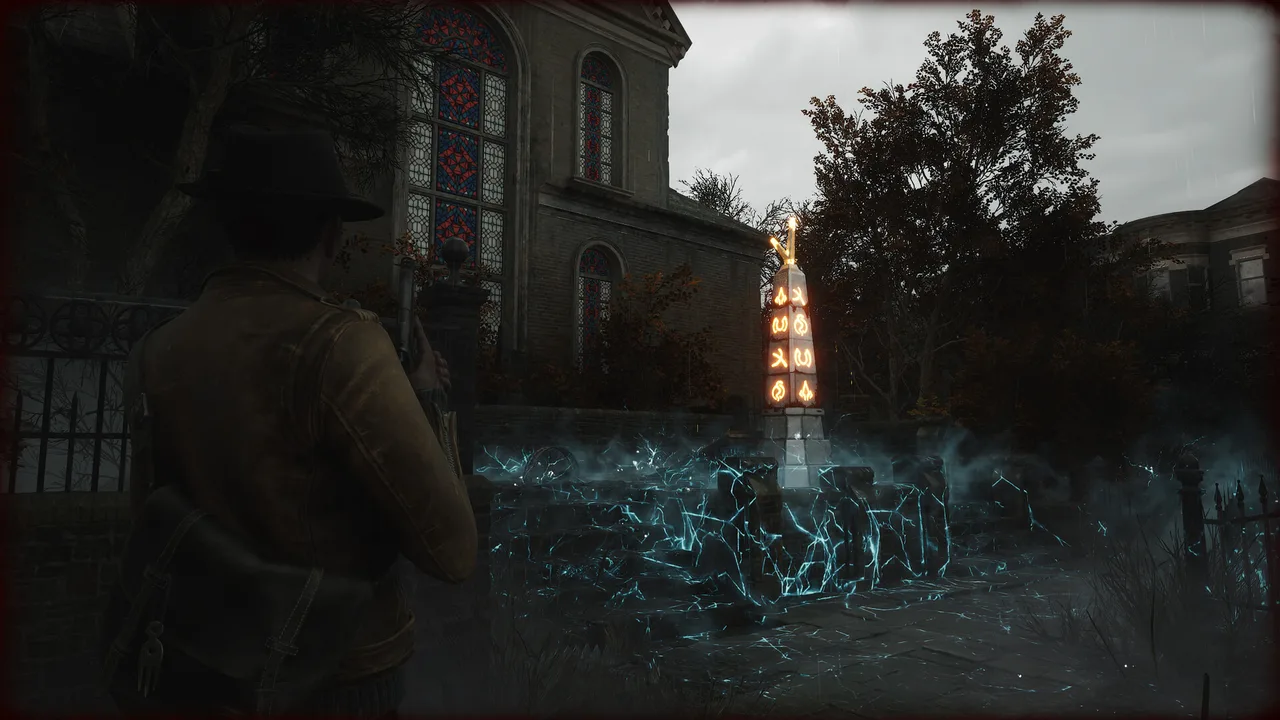
Past the last streetlight, past the last house, past the last prayer — that's where the shore starts.
We need to be upfront: the Outer Shore is not confirmed. No official Frogwares material has named it, detailed it, or shown it in gameplay footage. What we have is a collection of hints — environmental details from the demo’s horizon, the spectral figures in that one promotional screenshot, and the simple narrative logic that a game about a drowned coastal city needs an edge. A place where the town gives way to something raw and old and completely indifferent to human presence.
If it exists — and the circumstantial evidence is compelling — the Outer Shore is where Arkham stops pretending to be a city and admits what it’s become.
What We Think It Is
Beyond Arkham’s outermost streets, past the last row houses and the last industrial lots, the terrain would shift from urban ruin to coastal wilderness. Rocky shoreline. Salt marsh. Scrub pine bent sideways by generations of wind. The kind of New England littoral that Lovecraft described in stories like “The Shadow over Innsmouth” — bleak, fog-wrapped, and carrying the persistent sense that the land itself is only grudgingly above water.
The flood’s effect on this zone would be different from its impact on the city proper. There’s less to destroy. Instead, the water would blur boundaries — salt marsh bleeding into ocean, tidal pools expanding into permanent lakes, the shore retreating inland in ways that make the coastline unrecognizable from season to season. Or, given the supernatural nature of the flood, from hour to hour.
Fog dominates. Not the gentle haze of a maritime morning but something thicker, wetter, and seemingly intentional. The kind of fog that absorbs sound, swallows landmarks, and turns a straight path into a spiral. In gameplay terms, this likely translates to severely restricted visibility — worse even than the underwater murk of the Submerged Quarter, because at least underwater you know where the limits are. In fog, you don’t know what you can’t see.
The Things in the Mist
That promotional screenshot — spectral blue figures massed in the darkness beyond a building — is the strongest visual hint at what the Outer Shore might contain. These don’t look like Slithers. They don’t move like Deep Ones. They glow. They gather. They stand at the boundary between the city and whatever lies past it.
If these are a distinct enemy type — spectral entities, anomalies, reality-benders — they’d represent the game’s most overtly Lovecraftian threat. Not creatures with weak points you can shoot, but manifestations of something cosmic and incomprehensible. Conventional weapons might be useless. The sanity system might be your only “health bar” in encounters with them: you don’t die, you lose your mind, and at some threshold the game stops distinguishing between what’s real and what isn’t.
This is speculative, obviously. But a game rooted in Lovecraft needs a zone where the horror stops being biological — fishmen, animated corpses, things you can hit — and becomes existential. The Outer Shore is the natural place for that escalation.
Why You’d Risk It
Late-game lore. That’s the draw, assuming the district exists at all.
The flood came from somewhere. The supernatural force reshaping Arkham has an origin, a mechanism, a purpose (or a purposelessness, which is worse). The city’s interior districts — the Harbor, downtown, the Residential Flats — hold clues about the flood’s effects. The Outer Shore might hold clues about its cause.
Think of it geographically. If the flood is a supernatural ocean intrusion, then the shore is the contact point — the place where whatever is out there first touched Arkham. Ritual sites, standing stones, tidal caves with carvings older than the town. The kind of pre-colonial, pre-human marks on the landscape that Lovecraft scattered across his New England.
The investigation system would guide you here eventually if it follows a hub-and-spoke structure. You gather clues in the safer inner districts, and those clues point outward, toward the edges, toward the source. The Outer Shore is where the spokes converge.
The Landscape as Threat
Urban districts threaten you with creatures and structural hazards. The Outer Shore threatens you with itself. Open ground with no cover. Fog that defeats navigation. Terrain that shifts — marshland that was solid becomes quicksand, tidal flats that were exposed are suddenly knee-deep. The flood system in open terrain is a different animal than in a city, where buildings provide predictable high ground.
Sound behaves wrong in the fog. Echoes come from the wrong direction. The crash of waves sounds like it’s behind you regardless of which way you face. A voice calling your name — or something approximating your name — drifts from a direction you don’t want to walk toward but might have to.
Getting lost is the core hazard. In the city, you can orient by buildings, street signs, landmarks. On the Outer Shore, there are no landmarks. There are shapes in the fog that might be rocks or might be something else, and the shore curves in ways your compass doesn’t agree with. Without strong navigation skills or the boat as an anchor point, you could wander until your sanity or your supplies run out.
Honest Expectations
This entry is flagged as rumored because we genuinely don’t know if the Outer Shore will appear as a playable district, as a story-scripted location you visit once, or at all. The evidence is suggestive: the screenshot’s spectral figures, the genre’s need for escalation, the map’s implied boundaries, and the Lovecraftian tradition of coastal horror that would feel incomplete without a fog-bound, liminal shoreline.
If it does appear, expect it late in the game. Expect it to be punishing. Expect the loot to be minimal and the lore to be essential. And expect it to be the kind of place that sticks with you after you close the game — not because something jumped out at you, but because the fog was too quiet, the shore went on too long, and you couldn’t shake the feeling that the ocean was watching you walk.
We’ll update this page when Frogwares reveals more. Until then, the Outer Shore remains what it would be in-game: a shape at the edge of your vision, half-hidden by fog, waiting.