The Sinking City 2 Gameplay Trailer Breakdown: Every Detail We Spotted
We dissect The Sinking City 2's gameplay trailer frame by frame — monsters, boat combat, flooded Arkham, and every atmospheric detail.
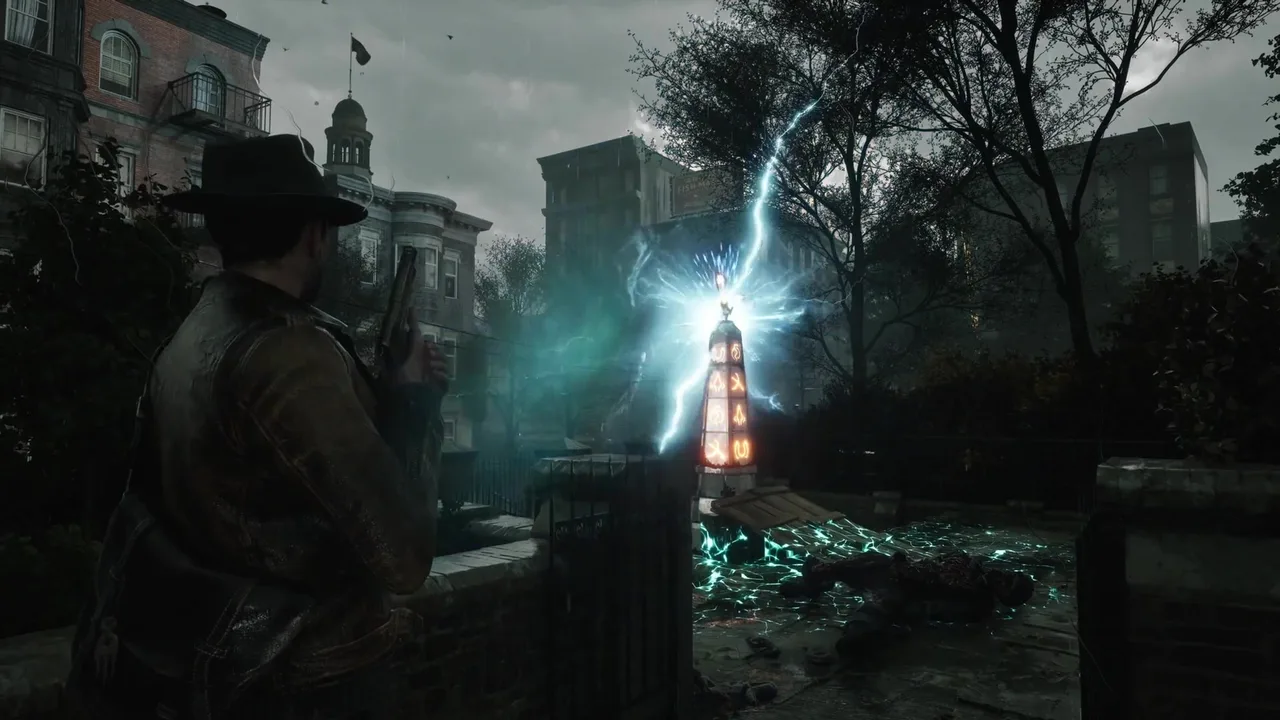
Frogwares dropped a gameplay trailer alongside the August 18 release date confirmation, and it’s dense. Not “here’s a flashy montage with a licensed song” dense — actually dense with details about how The Sinking City 2 plays, what Arkham looks like, and what’s waiting in the water. I’ve gone through it more times than is probably healthy, so here’s everything I caught.
The Opening: Arkham From the Water
The trailer opens from the water. Not above it, not looking at it — from the surface level, like the camera is sitting in a boat. The first thing you see is the Arkham skyline, and it’s immediately wrong. Buildings lean at angles that suggest the foundations have shifted. Church steeples poke out of water where streets used to be. There’s something in the clouds — not clouds exactly, more like the sky has a texture it shouldn’t have, a kind of organic ripple.
This isn’t just cinematography. It’s establishing the game’s dominant perspective: you’re at water level, and the city is towering above you. The power dynamic is architectural. You’re small, the water is everywhere, and everything above the waterline is crumbling.
The key art vibes are strong here — the shot is reminiscent of the branded artwork showing the protagonist’s back as he faces the drowned city with eldritch tentacles reaching over the skyline. But in motion, it’s far more oppressive.
Boat Navigation: Slow and Intentional
About fifteen seconds in, we see actual gameplay of the boat traversal. The protagonist is in a small rowboat — not a motorboat, not a speedboat, a rowboat — threading through a flooded street. Debris bumps against the hull. A wooden crate floats past. The camera sits low, close to the character’s back, and the field of view is deliberately tight.
The movement speed is slow. Deliberately, almost aggressively slow. This is clearly a design decision, not a performance issue. Frogwares wants travel to feel tense, not efficient. Every turn around a flooded corner is a moment where something could be in the water ahead of you.
There’s a brief shot of the boat passing between two half-submerged buildings, and the water between them is darker — deeper. The lighting shifts as the boat moves from open water to shadowed narrows. Whatever the dynamic lighting system is doing, it’s working.
One detail I almost missed: there appears to be a small lamp on the boat’s prow. Whether this is functional — a light source you can use or that attracts attention — or just aesthetic isn’t clear from the trailer. But given the game’s emphasis on flashlights and visibility as mechanics, a boat-mounted light feels like it could matter.
The First Monster: Something in the Shallows
At roughly the thirty-second mark, the trailer cuts to an on-foot section. The protagonist has docked — or beached, given the angle of the boat — and is moving through ankle-deep water in what looks like a partially collapsed fish market. Wooden stalls, hanging hooks, the remains of daily commerce now half-underwater.
Then movement. Something in the water ahead, between the stalls. The protagonist raises a weapon — looks like a revolver — and the camera tightens. The thing in the water isn’t fully visible. It’s low, flat against the surface, and moving in a way that doesn’t match any animal you’d recognize. It could be a Deep One in its aquatic posture, or something else entirely.
The shot cuts before we see the encounter play out, which is smart trailer editing but frustrating for analysis. What we can glean: enemies can be in the water around you, not just on dry ground. This means combat in flooded areas isn’t just about what’s ahead of you — it’s about what’s at your feet.
Combat: Firearms, Flashlight, and Vulnerability
The meatiest combat footage comes in the trailer’s middle third. We see the protagonist in a dark interior — brick walls, exposed pipes, water pooling on the floor — facing off against what appears to be a Slither. Based on what Frogwares has described, the Slither are animated dead, and this thing in the trailer looks the part: humanoid but wrong, moving with a lurching momentum that suggests the body isn’t entirely under its own control.
The protagonist fires twice. The Slither staggers but doesn’t drop. Then a flashlight sweep — the beam catches the creature’s head and it recoils, possibly a weak-point reaction. The protagonist fires a third time, and the Slither goes down, but there’s a second one visible in the background, already moving.
Several things stand out here:
Ammunition economy. Three shots to kill one common-looking enemy. If ammo is as scarce as the prologue demo suggests, that’s a significant investment per kill. Running from enemies rather than fighting them seems like it’ll be a frequent and valid choice.
The flashlight as a tool. The flashlight stagger/weak-point interaction is interesting. If enemies have light-sensitive weak points, the flashlight becomes a tactical tool — you use it to create openings, not just to see. This echoes some of the mechanics in Alan Wake, but the implementation looks different: less “shine light to strip shields” and more “briefly stun to create a shot window.”
Sound design in combat. Even in a compressed trailer audio stream, the gunshots sound punchy and the creature sounds are distinct — a wet, guttural noise that’s more unsettling than a typical game monster roar. The protagonist’s breathing is audible too, which suggests either a stamina system or the sanity/pressure mechanic manifesting through audio cues.
The Spectral Encounter: Reality Bending
About two-thirds through, there’s a sequence that’s harder to parse. The protagonist is outside at night, and in the distance — maybe fifty meters away, past a row of flooded buildings — there are blue-white spectral figures. Not one or two. A mass of them, clustered together, glowing faintly.
These are presumably the “reality-bending shadows” that Frogwares has mentioned as one of the enemy types. They don’t move toward the protagonist in the trailer — they just exist, a wall of wrongness between the player and wherever they need to go. The protagonist doesn’t engage. They seem to be observing, or possibly looking for a way around.
This is the trailer’s most Lovecraftian moment. Not a jumpscare, not a chase — just the quiet realization that something incomprehensible is standing between you and your objective, and fighting it may not be an option. The scale of the spectral gathering suggests these aren’t enemies you pick off one by one. They’re an environmental hazard, something you navigate around or find a way through that doesn’t involve bullets.
If the investigation system offers alternate routes past encounters like this, that’s a compelling reason to engage with optional investigation mechanics even if you’re primarily a “push through the horror” player.
Environmental Details: Reading Arkham
The trailer is packed with environmental storytelling that rewards frame-by-frame attention:
- Water marks on building walls at different heights, suggesting the flood happened in stages — it rose, retreated, rose again higher. This matches the dynamic flood system Frogwares has described.
- Art Deco detailing on the buildings is remarkable. Geometric friezes, fluted columns, fan-shaped window transoms. Frogwares’ art team built a 1920s city, not just a generic “old city.”
- A speakeasy sign visible in one shot, half-submerged. The Prohibition setting isn’t just backdrop — there are specific 1920s cultural touchstones woven into the environment.
- Barnacles and marine growth on surfaces that should be above water. The flood has been here long enough for the ocean to start claiming what used to be dry.
- An investigation board or map briefly visible in what looks like a safe room or hub area. It’s too small to read in the trailer, but the investigation map UI appears to show Arkham divided into zones with markers — possibly mission objectives or points of interest.
What the Trailer Doesn’t Show
Notably absent from the gameplay trailer:
- Melee combat. The game reportedly has melee weapons, but the trailer only shows firearms. This could mean melee is a backup option rather than a primary approach, or Frogwares simply chose to showcase gunplay in this trailer.
- The build/upgrade system. No inventory screens, no upgrade menus, no crafting. The game reportedly has build customization, but the trailer is focused entirely on in-game action.
- NPC interaction. No dialogue, no friendly characters, no quest-giving. The trailer presents a lonely experience — you, the boat, and things that want to kill you. Whether the full game has more social moments is unclear.
- The protagonist’s identity. We see a trench-coated figure from behind, consistent with the key art, but there’s no voice, no name, no face. Frogwares is keeping the main character deliberately ambiguous in marketing so far.
- Boss encounters. Everything in the trailer looks like standard exploration and regular enemy encounters. If there are major boss creatures — and in a Lovecraftian game, you’d expect at least a few — they’re being saved for later reveals.
Reading Between the Frames
The overall impression is of a game that knows its identity. This isn’t a trailer that’s trying to be everything to everyone. It’s selling atmosphere, tension, and vulnerability. The slow boat movement, the limited ammunition, the spectral figures you can’t fight, the creature that takes three shots to drop — all of it communicates: you are not powerful here. Arkham is not yours.
That’s the right message for survival horror. Whether the full game sustains that tension across its entire runtime is the question the August 18 release will answer. For now, the trailer makes a strong argument that Frogwares’ genre shift wasn’t just a business decision — it’s a creative one, and they’re committed to it.
Watch the trailer again. Then play the demo. Then mark your calendar.