Tools and Light Sources
Exploration Essentials
Flashlights, lockpicks, and exploration tools in The Sinking City 2 — essential non-combat gear for navigating Arkham's darkest corners.
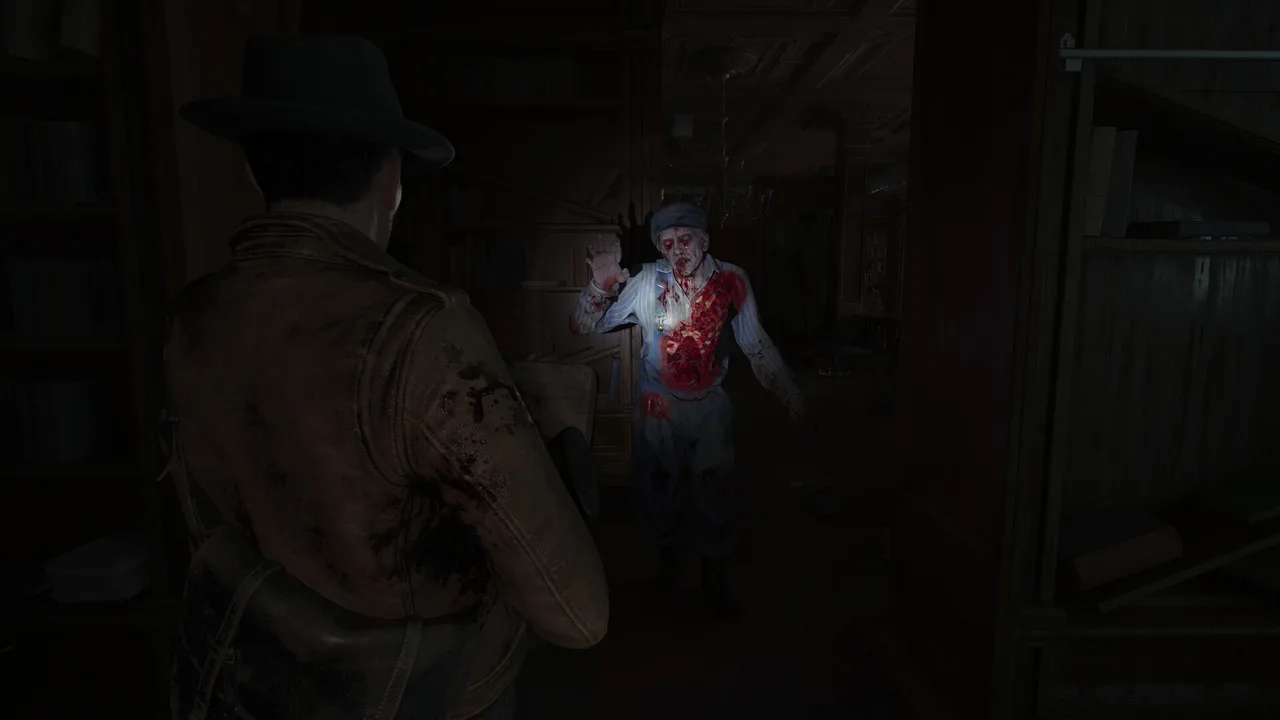
The flashlight doesn't make you safe. It just shows you what you should be afraid of.
Not everything in your inventory is designed to kill. Some of it is designed to keep you from stumbling blind through a drowned city full of things that very much want to kill you.
Tools and light sources are the quiet backbone of exploration in The Sinking City 2. The flashlight is confirmed from demo footage — you can see the protagonist cutting through absolute darkness with a handheld beam. The rest is extrapolated from genre convention and the game’s 1920s investigation framework, but this much is clear: Arkham after dark is not a place you navigate by feel.
The flashlight
The flashlight is, functionally, your most important piece of equipment. Not your revolver, not your shotgun, not your medical supplies. Your flashlight. Because you can’t shoot what you can’t see, and The Sinking City 2 is dark.
Demo footage shows a handheld flashlight with a focused beam — not a modern tactical light, but something period-appropriate. A 1920s Ever Ready or similar battery-powered torch. The beam is narrow enough to create genuine tension. You illuminate what’s directly ahead, but your periphery stays black. That darkness isn’t just atmospheric. It’s where the threats are.
Expect the flashlight to operate on a battery or charge mechanic. Keeping it on drains power; turning it off saves battery but leaves you blind. Finding replacement batteries (or a charging mechanism — generator-powered stations, perhaps) becomes another thread in the resource management weave.
There’s a tactical question embedded in every use of the flashlight: do you want to see, or do you want to stay hidden? The beam illuminates your surroundings, but it also signals your position to anything nearby. In encounters where stealth is viable, turning off the flashlight and navigating by ambient light or sound might be the smarter play — riskier, but quieter.
The demo also suggests the flashlight might interact with certain enemies or environmental elements. Some creatures may react to light — attracted to it, repelled by it, or behaving differently when illuminated versus when in darkness. If TSC2 builds on the original game’s supernatural investigation mechanics, the flashlight could also reveal hidden messages, spectral traces, or clues invisible to the naked eye.
Lockpicks and access tools
Locked doors in survival horror serve a specific purpose: they gate optional content. The main path stays open; locked rooms contain bonus supplies, lore documents, upgrade materials, or shortcuts. Lockpicks are the key — literally — to accessing these rewards.
In a 1920s setting, expect physical lockpicks rather than electronic hacking tools. A set of picks, a tension wrench, and a lock mechanism you need to manipulate. Whether this manifests as a mini-game or a simple consumable expenditure (“use one lockpick to open this door”) remains to be seen. Both approaches exist in the genre.
If lockpicks are consumable — and they probably are — then every locked door presents a gamble. You spend a pick without knowing what’s behind the door. It might be a room full of revolver ammunition and bandages. It might be a lore note and nothing else. It might be an enemy you weren’t prepared for. The uncertainty is part of the design.
Carry lockpicks when you find them, and use them on locked doors in resource-critical moments. If you’re healthy and well-supplied, that locked pharmacy might not be worth the pick. If you’re desperate, the same door becomes essential.
Investigation tools
The Sinking City 2 features an optional investigation system — clues, puzzles, alternate routes, and lore that enrich the experience without hard-gating progress. This system almost certainly requires tools.
The first game gave players supernatural detective vision and a case-linking mechanic. TSC2 is expected to evolve these systems. Investigation tools might include a notebook or case journal that tracks discovered clues, a magnifying glass or loupe for examining evidence, photographic equipment for documenting scenes, or thematic instruments tied to the Lovecraftian elements — an EMF-style device for detecting supernatural residue, or a ritual component for revealing hidden things.
These tools likely don’t occupy standard inventory slots. They’re persistent equipment — always available, part of your character’s core kit rather than something you scavenge and consume. Their function is to enrich exploration and reward thoroughness, not to create another resource drain.
For players who engage with the investigation system fully, these tools unlock entire layers of the game. Alternate paths through areas, lore that contextualizes the horror, upgrades or resources hidden behind puzzle solutions. The combat guide and broader systems pages will cover how investigation intersects with combat and survival as more details emerge.
Strengths and weaknesses
Strengths:
- Flashlight is essential — you literally cannot navigate dark areas without it
- Lockpicks provide access to optional supply caches that can sustain longer runs
- Investigation tools unlock alternate routes and hidden rewards
- Non-combat tools reduce overall resource expenditure by enabling smarter navigation
Weaknesses:
- Flashlight battery depletion creates resource anxiety on top of existing scarcity
- Light can attract enemy attention, creating a stealth trade-off
- Lockpicks are consumable and the reward behind locked doors is uncertain
- Investigation tools require time investment that may conflict with survival urgency
Tips
Toggle the flashlight. Don’t leave it on constantly. Sweep an area, note what you see, turn it off, move. This conserves battery and reduces your visibility to enemies. Develop a rhythm: light on for two seconds to scan, light off to move. It feels unsafe, and that’s because it is — but it’s less unsafe than running out of battery in a Deep One habitat.
Listen when you can’t see. TSC2 appears to have directional audio design, and enemy audio cues — wet footsteps, gurgling, scraping — are your secondary navigation system. The flashlight shows you what’s ahead; your ears tell you what’s beside and behind. Use both.
Save lockpicks for areas where you genuinely need supplies. If you’re about to enter a dangerous section and your resources are thin, that locked door might contain exactly what you need. If you’re comfortable and well-stocked, the pick is better saved for a more desperate moment.
Explore investigation elements even when the survival pressure feels intense. The optional content in TSC2 rewards thoroughness with tangible benefits — supplies, shortcuts, upgrades. A two-minute detour to examine a clue might reveal an alternate path that bypasses the combat encounter you were dreading. Smart exploration is its own form of survival.