Shotgun
Close-Range Devastator
The Sinking City 2's close-range devastator — a pump-action shotgun for tight corridors and ambush encounters. Ammo, tactics, and loadout tips.
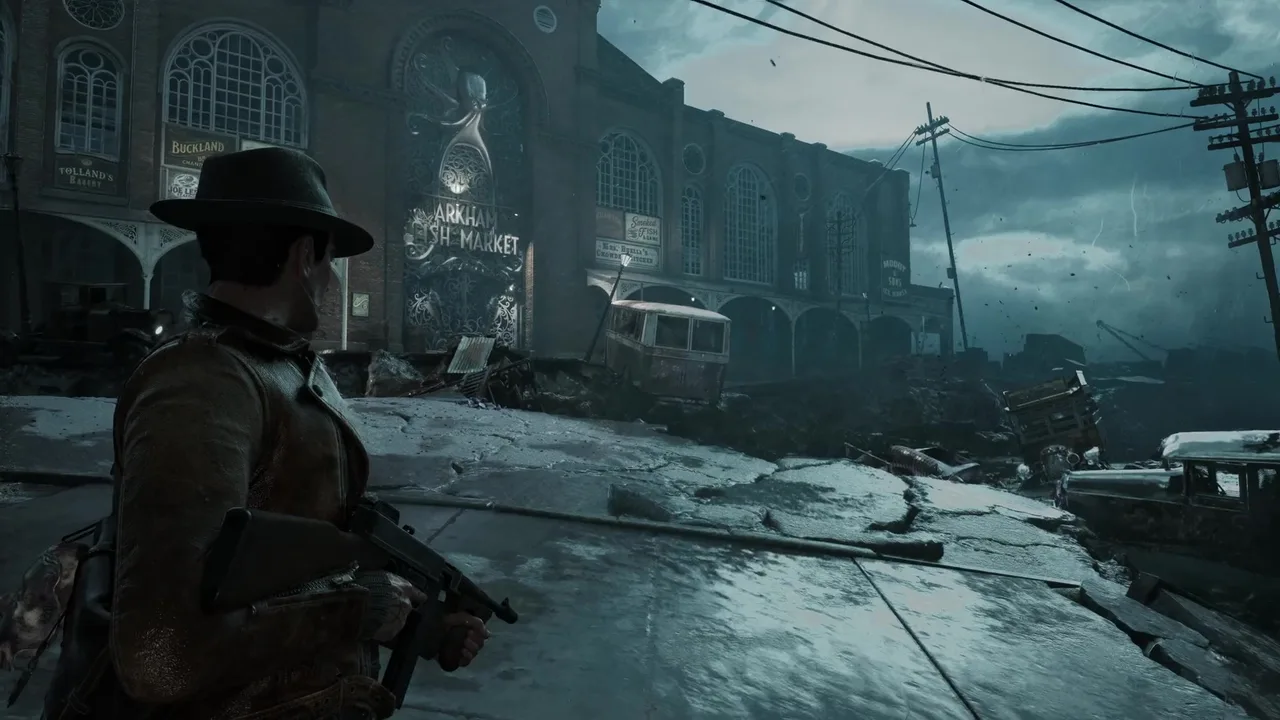
When something fills the doorway, fill it with buckshot.
Survival horror shotguns exist for one reason: something is already too close, and you need it to stop. In a game set in drowned 1920s Arkham — cramped hallways, flooded basements, doorways you can’t see through — a pump-action shotgun is the emergency brake between you and the things that aren’t slowing down.
Frogwares hasn’t confirmed specific weapon models, but a pump-action 12-gauge fits the era perfectly and the demo’s interior encounters practically beg for one.
What it is
Expect a tube-magazine pump-action, probably holding four to six shells. The 1920s gave us the Winchester Model 1897 and the Remington Model 10 — trench guns that soldiers brought home from the Great War. A weapon like that ending up in a flooded Massachusetts city isn’t a stretch; it’s practically historical.
The shotgun trades the revolver’s versatility for raw stopping power at close range. Each shot hits like a wall. The spread pattern means you don’t need perfect aim — useful when your hands are shaking because something just crashed through a boarded window. But the pump action between shots creates a rhythm you have to respect. Fire, pump, fire. There’s no spraying.
When to use it
Pull the shotgun when the geometry favors it. Narrow corridors, flooded rooms with low visibility, any space where enemies will be within arm’s reach before you can think. The shotgun’s effective range drops off sharply — beyond about ten meters, the spread disperses too much and you’re wasting shells on partial hits.
The perfect shotgun moment looks like this: you’re clearing a flooded apartment, you open a door, and something is right there. One blast at that range should stagger or kill most common threats outright. Two if it’s something tougher. Compare that to the four or five revolver rounds you’d need for the same kill, and the shotgun’s ammo efficiency at close range starts making sense — even though individual shells are harder to find.
Against Deep Ones surfacing from shallow water, the shotgun is brutally effective during that brief window when they rise before lunging. They’re close, they’re exposed, and the spread catches their whole upper body. If you know an aquatic encounter is coming and you have shells to spare, the shotgun is the right call.
Where it falls apart: open areas, multiple enemies at range, anything that requires precision. Shotgun pellets don’t care about weak points the way a rifle bullet does. You’re trading surgical efficiency for blunt force, and sometimes the situation demands a scalpel.
Ammo economy
Shotgun shells are expected to be significantly rarer than revolver ammunition. You might find a box of two or three in a well-searched building; you might go an entire district without finding any. This scarcity is the shotgun’s real balancing factor. The gun itself is devastating, but the resource economy ensures you can’t rely on it as a primary weapon.
Think of shotgun shells less as “ammunition” and more as “panic buttons.” Carry them for the encounters that demand close-range power — ambushes, tight spaces, enemies that are already inside your comfort zone. Use the revolver and melee weapons for everything else.
If TSC2 includes any crafting or ammunition assembly system (which seems likely given the survival horror emphasis on resource management), shotgun shells may require components that compete with other valuable items. That trade-off — shells now versus bandages later — is the kind of resource tension that defines the genre.
Strengths and weaknesses
Strengths:
- Highest per-shot damage among standard firearms
- Spread pattern is forgiving on aim, especially in dark or chaotic encounters
- Stagger effect on hit — even enemies that survive will flinch, buying you time
- Psychologically reassuring (this matters when the game is actively trying to scare you)
Weaknesses:
- Pump action means slow follow-up shots — if you miss, you’re vulnerable during the pump cycle
- Shell scarcity forces constant rationing
- Effective range is extremely short; beyond a room’s length, damage drops off hard
- Reload is individual shells, not a magazine swap — topping off mid-combat is slow and risky
- Loud; in a game that likely rewards stealth in certain encounters, a shotgun blast announces your position to everything nearby
Tips
The pump cycle is your biggest vulnerability. Fire, then immediately start moving — sidestep, back up, anything to buy the half-second the pump animation takes. Standing still and pumping while a creature recovers from its stagger is how you take a hit you can’t afford.
Load shells individually whenever you have a quiet moment. If you’ve fired two rounds and the area seems clear, top off. Entering an encounter with a partially loaded tube is dangerous, and the shell-by-shell reload means you can’t quickly refill from empty the way you can slam a cylinder shut on the revolver.
Pair the shotgun with throwables. A molotov or distraction thrown into a room before you enter can cluster enemies or force them toward a doorway — and a doorway is exactly where the shotgun does its best work. Funnel, then blast. The combat guide will likely formalize this kind of tactical setup, but the principle is ancient: make them come to you on your terms.
Don’t use the shotgun on anything you could handle with cheaper tools. A lone shambling corpse in an open street? Revolver, or just walk around it. Save the shells for the moment when the hallway fills with something fast and angry and you have nowhere to retreat.