Revolver
Reliable Sidearm
The Sinking City 2's workhorse sidearm — a 1920s revolver built for reliability in Arkham's flooded streets. Ammo tips, best uses, and loadout advice.
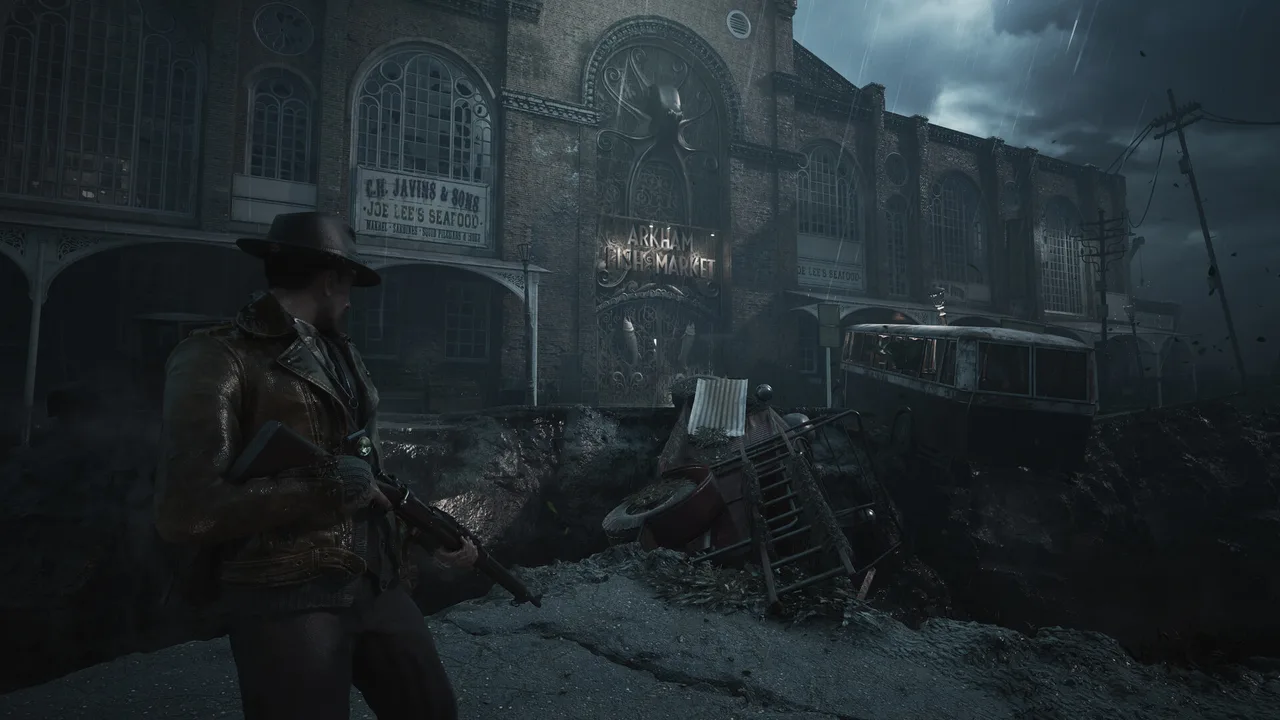
Six shots. Make them matter.
A revolver is the kind of weapon that belongs in a 1920s survival horror game the way a flashlight belongs in a dark hallway — it’s not optional, and it’s probably the first real tool between you and whatever Arkham throws at you. Based on demo footage and the game’s period setting, a break-action or swing-out cylinder revolver almost certainly anchors your early loadout in The Sinking City 2.
Don’t mistake “starter weapon” for “disposable.” In a game where every round of ammunition is a small mercy, the revolver is your constant.
What it is
The revolver visible in preview footage appears to be a standard six-shot, likely chambered in something equivalent to .38 Special — appropriate for the 1920s, common enough that you’d expect to find ammunition scattered through Arkham’s ransacked apartments and abandoned police stations. Frogwares hasn’t detailed exact weapon stats, but the demo shows it functioning as a medium-damage, moderate-rate-of-fire sidearm with a noticeable reload pause as the cylinder swings out and back.
It’s not flashy. That’s the point. The shotgun hits harder up close, the hunting rifle reaches further, but the revolver sits in a comfortable middle ground that handles most situations without burning through your scarce resources.
When to use it
The revolver is your answer to the question “I need to shoot something but I can’t afford to waste specialized ammo.” It’s the weapon you pull when a single Slither rounds a corner and you need to put it down before it closes distance. It’s what you fire while backing through a doorway, buying yourself two seconds to think.
Against common enemies — the reanimated dead, lone creatures in flooded hallways — two or three aimed shots to a weak point should handle most threats. That’s half your cylinder per kill, which sounds expensive until you compare it to the shotgun shells or rifle rounds you’re saving for something worse.
Mid-range is where it shines. Too far and you’re wasting ammo on missed shots. Too close and you should probably be swinging a pipe or axe instead. The sweet spot is that distance where you can still aim carefully, still see the weak point clearly, but have enough space to react if the thing charges.
Ammo economy
Here’s the hard truth about the revolver: you will always want more ammunition than you have. That’s the survival horror contract, and TSC2 leans into it hard.
Revolver ammo is expected to be the most common ammunition type in the game — you’ll find loose rounds in desk drawers, on shelves, occasionally on corpses. But “most common” in a resource-scarce survival horror still means “never enough.” You might find four rounds in a good room. You might find nothing for three rooms straight.
The temptation is to use the revolver for everything because the ammo is relatively available. Resist this. Every bullet spent on a threat you could have avoided, snuck past, or handled with a melee weapon is a bullet missing from the cylinder when something genuinely dangerous blocks your path.
Some practical habits worth building early:
- Reload proactively. Don’t walk into a new area with two rounds in the cylinder. The reload animation takes time you might not have.
- Count your shots. Six rounds, then a full reload. If you’ve fired four and the threat is staggered, consider closing in with melee rather than spending your last two.
- Check the resource management system before committing to a fight. If you’re sitting on thirty rounds, you can afford to be liberal. If you’re under ten, switch to survival mode and avoid combat where possible.
Strengths and weaknesses
The revolver’s greatest strength is dependability. It works in every situation, against every enemy type, at reasonable range. It doesn’t excel anywhere, but it never catastrophically fails you either. When the lights go out and something screams in the next room, the revolver is the weapon you’ll reach for by instinct.
Its weakness is ceiling. Against tougher enemies — elites, bosses, anything with armor plating or thick hide — the revolver deals modest damage per shot. You can still use it, but you’ll chew through ammunition doing what a shotgun blast or a well-placed rifle round could accomplish faster. It’s a sidearm, not a problem-solver for the worst things in Arkham.
The reload speed is also a factor. That cylinder swing isn’t instant, and in a game where enemies close distance aggressively, a reload at the wrong moment can cost you health you can’t easily recover. The combat guide will likely emphasize reload timing as a core skill.
Tips
Pair the revolver with a melee weapon for routine encounters. Open with a shot or two to stagger the target, close in with a pipe or hatchet to finish it without spending more rounds. This hybrid approach probably doubles the mileage of your ammunition supply.
Learn the weak points. The revolver’s per-shot damage is modest, but a headshot or a hit to an exposed vulnerability changes the math entirely. Two aimed shots to a weak point beat five panicked shots to center mass, and they cost less than half the ammo.
Finally — and this is survival horror 101, but it bears repeating — not every enemy needs to die. If you can slip past a threat in a flooded corridor without firing, your revolver stays loaded for the encounter you can’t avoid. Arkham rewards caution more than bravery.