Hunting Rifle
Precision Marksman
The Sinking City 2's precision firearm — a bolt-action hunting rifle for weak-point targeting and ranged threats across Arkham's flooded districts.
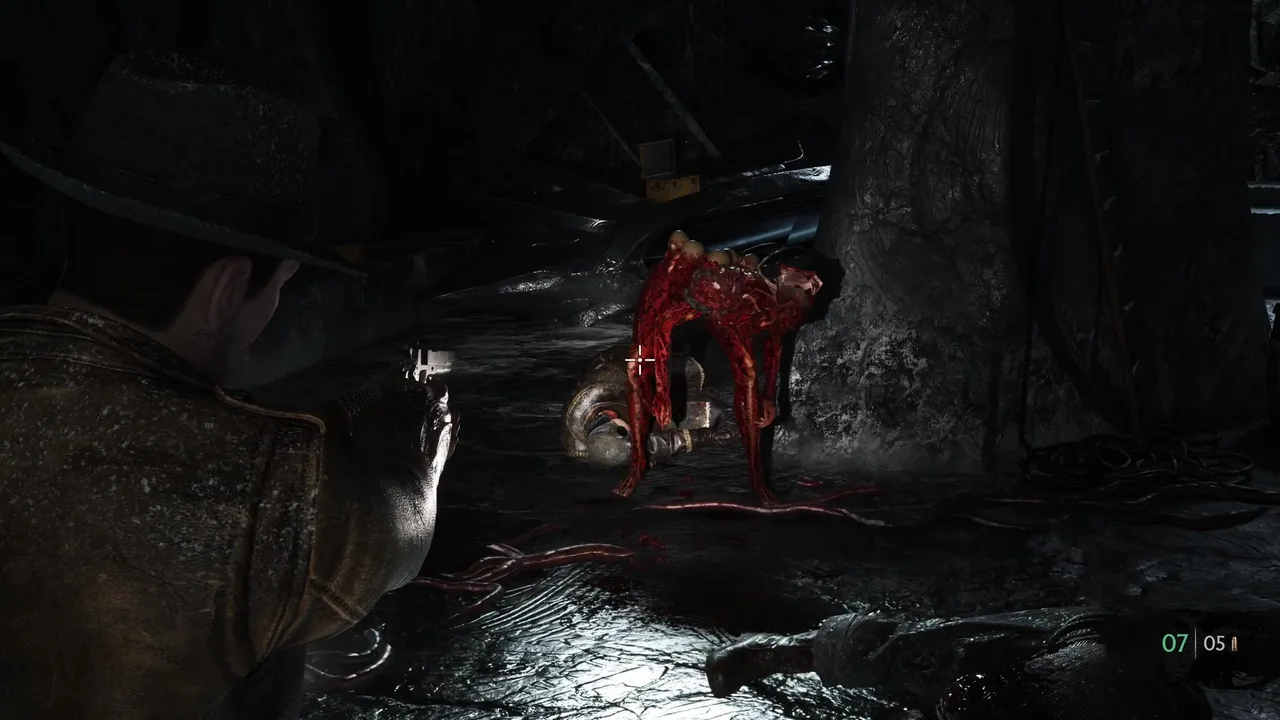
One bullet, one answer. If you miss, the question gets louder.
Look at The Sinking City 2’s key art — the detective protagonist, trench coat, flooded skyline, and a rifle slung over his back. That rifle isn’t decorative. In a game built around enemy weak points and scarce ammunition, a precision weapon that can end an encounter in one or two shots isn’t a luxury. It’s survival math.
The hunting rifle is probably the most punishing weapon in your loadout — punishing to enemies when you hit, punishing to you when you miss.
What it is
Based on the key art and the 1920s setting, expect a bolt-action rifle — something in the family of a Springfield 1903 or a civilian hunting model common in New England between the wars. Five-round internal magazine, manually cycled bolt between shots, iron sights. No scope, most likely. This isn’t a sniper fantasy; it’s a tool built for deliberate, aimed fire.
The bolt action defines the weapon’s personality. You fire one shot, then work the bolt — pull back, push forward, chamber the next round. That cycle takes time. In a game where enemies are aggressive and close distance quickly, every shot you take with the rifle is a commitment. You can’t panic-fire a bolt-action. You can only aim, breathe, and squeeze.
When to use it
The rifle earns its keep in two scenarios: ranged engagements and weak-point exploitation.
When you spot enemies at a distance — across a flooded plaza, down a long corridor, through a gap in collapsed buildings — the rifle lets you engage before they’re close enough to threaten you. A well-aimed opening shot can drop a common enemy outright or severely damage an elite before the fight even starts. That’s ammunition you didn’t have to spend on a prolonged close-range brawl.
Weak points are where the rifle truly shines. Every enemy in TSC2 reportedly has exploitable vulnerabilities — cranial ridges on Deep Ones, exposed tissue on the animated dead, glowing nodes on the more eldritch creatures. The rifle’s accuracy lets you target these spots deliberately. One rifle round to a weak point deals damage that might take three or four revolver shots to match.
Against elite enemies and bosses, the rifle becomes your surgical instrument. Open the fight with aimed shots to the weak point, switch to the revolver when they close distance, and fall back to melee if ammunition runs dry. That cascade — rifle, sidearm, melee — is probably the core combat rhythm Frogwares is building around.
Where the rifle fails: close quarters, multiple enemies, anything inside a small room. The bolt cycle is too slow for reactive combat, and if something is already lunging at you, shouldering a rifle is the wrong instinct. That’s shotgun territory.
Ammo economy
Rifle ammunition is expected to be the rarest of the three standard firearm calibers. You might find a handful of rounds in a hunting cabin, a lockbox, or on a body — but never enough to use the rifle casually.
This scarcity is intentional. The rifle deals the highest damage per round of any standard firearm, and if ammunition were plentiful, it would trivialize encounters. Instead, the resource system creates a constant tension: you have six rifle rounds, do you spend one on this Slither, or save all six for whatever’s deeper in the district?
General guidelines for rationing:
- Don’t use rifle rounds on common enemies unless you can guarantee a one-shot kill. A missed rifle shot is a worse trade than two revolver rounds that both connect.
- Save rifle ammo for elites and bosses. These high-danger targets are where the damage-per-round payoff justifies the cost.
- If you’re exploring and not in combat, keep the rifle stowed. Walking through Arkham with the rifle shouldered invites impulsive shots at distant shapes that might not even be hostile.
Strengths and weaknesses
The rifle’s strengths are clinical. Highest single-round damage. Best accuracy at range. Most effective weapon for weak-point targeting. If you’re disciplined and your aim is true, the rifle is the most efficient weapon in the game — maximum damage for minimum ammunition.
Its weaknesses are equally clear. The bolt cycle punishes missed shots brutally. You get one chance per cycle to land a hit; if you miss, you’re working the bolt while the enemy gains ground. The rifle is useless in tight spaces where you can’t create distance. And the ammunition scarcity means the rifle is functionally a limited-use tool — you might only fire it ten or fifteen times per hour of gameplay.
There’s also a psychological factor. The rifle demands calm. In a horror game designed to make you panicky — sanity effects warping your vision, enemies screaming, water rising — staying calm enough to aim carefully at a specific weak point is its own kind of challenge. The rifle rewards composure the way the shotgun rewards aggression.
Tips
Practice finding weak points fast. When you enter a new encounter and spot an unfamiliar enemy, take one second to scan for the vulnerability before firing. A half-second of observation can turn a wasted shot into an instant kill.
Use the environment. Elevation is your friend — staircases, balconies, rooftops, anything that puts vertical distance between you and ground-level threats. Enemies are slower climbing than running, and the extra seconds let you work the bolt between shots without pressure.
The rifle pairs well with the combat guide’s expected advice on encounter preparation. Before entering a known danger zone, check your rifle ammunition, identify a vantage point, and plan your opening shot. The best rifle fight is one that’s half over before the enemy knows you’re there.
And when the rifle’s empty — because it will be empty, sooner than you’d like — put it away without regret. The rifle is a precision tool, not a security blanket. Arkham has other answers for close-range problems.