The Sinking City 2: Is It More Resident Evil 2 or Resident Evil 4? Combat Pacing Explained
Wondering if The Sinking City 2 plays like Resident Evil 4 or RE2? We examine its tuned combat, severe ammo scarcity, and why surviving Arkham demands restraint.
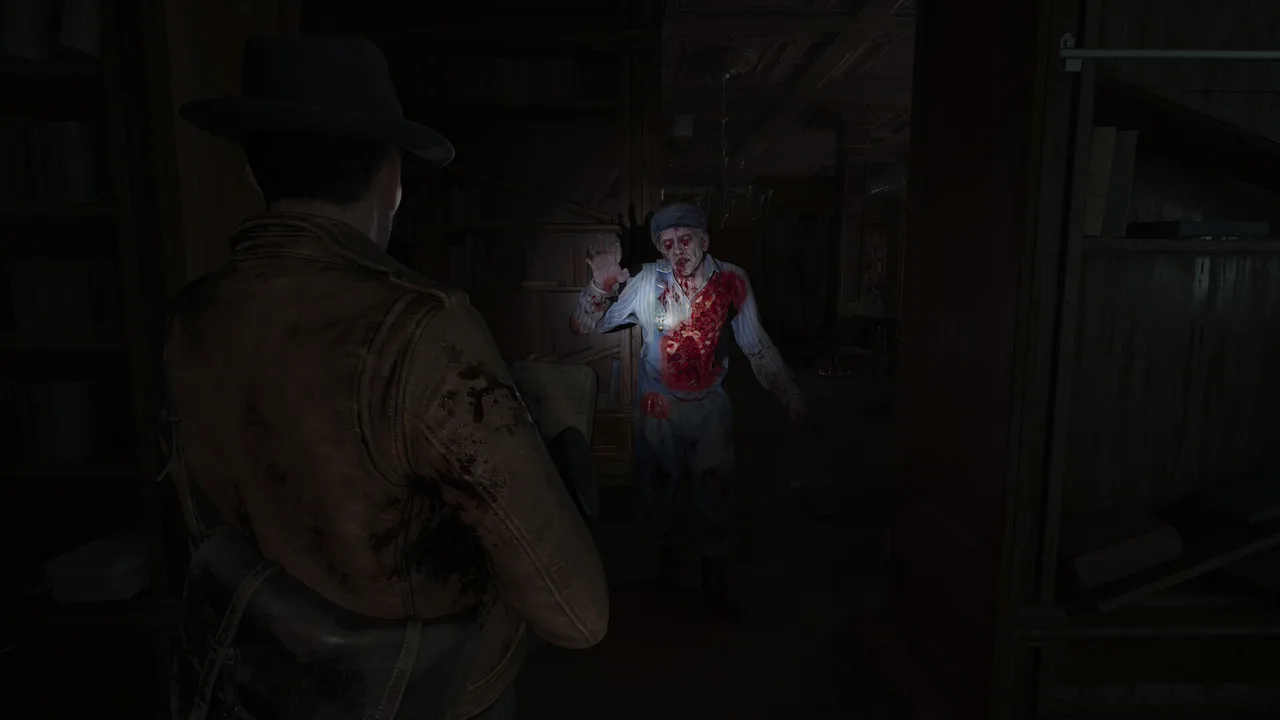
Recent trailers highlighting combat updates and community accolades have sparked a recurring debate across player forums: how does Frogwares’ latest nightmare actually feel with a controller in hand? Prospective buyers arriving from modern action-horror titles frequently ask whether the expedition through drowned Arkham mirrors the empowered, roundhouse-kicking gunplay of Resident Evil 4 or the suffocating, bullet-pinching claustrophobia of the Resident Evil 2 remake.
The answer matters because your expectations will dictate whether you survive your first evening in Arkham or burn through your entire reserve of gunpowder before clearing your third flooded tenement. While recent patches have polished weapon responsiveness and collision feedback, The Sinking City 2 plant its boots squarely in traditional survival horror territory. Anyone expecting to become a walking arsenal will find themselves drowned in black water and cold regret.
The Illusion of Firepower: The Math of Gunplay in Drowned Arkham
When you first acquire firearms like the service revolver or the field shotgun, muscle memory from mainstream third-person shooters tempts you to stand your ground. You see an aberration dragging itself across the rotting floorboards of a ruined clinic, align your iron sights, and open fire.
That instinct is precisely what the level design seeks to punish. In Resident Evil 4, downed adversaries drop currency, shotgun shells, and healing herbs, creating a positive reinforcement loop that rewards aggression. In The Sinking City 2, combat operates on a strict deficit economy. Monsters rarely surrender valuable crafting components, and the sheer bullet sponge potential of eldritch threats turns every prolonged shootout into a losing transaction.
As outlined in our resource management guide, chemical primers, lead casings, and clean cloth are hand-placed in finite quantities across each district. Spending five precious revolver rounds to execute an isolated wanderer in an optional corridor leaves you defenseless when navigating inevitable chokepoints later. The game gives you weapons not to cleanse the city, but to purchase brief windows of tactical mobility.
Staggers Over Slayers: Reading the Encounter Design
Understanding how enemies react to damage reveals the fundamental mechanics separating Frogwares’ title from action shooters. In games focused on kinetic combat, staggering a target opens a prompt for a high-damage melee execution or crowd-clearing kick. Here, a stagger is strictly an evacuation signal.
When studying how to fight Deep Ones, experienced players target unarmored joints or fragile cranial ridges to trigger a temporary disorientation animation. That two-second stagger is your cue to slip around the monster, squeeze through a barricaded door frame, and bolt up the stairs. Attempting to follow up with clumsy melee strikes without stamina will drain your character’s breath and expose your flanks to surprise grabs.
The environment compounds this vulnerability. Wading through knee-deep water drastically cuts your sprint velocity, preventing the fluid kite-and-shoot loops common in action titles. Navigating tight crawlspaces against agile abominations like the Slither requires careful spacing, baiting lunges into solid brickwork, and using environmental lanterns to create burning barriers rather than trading shots face-to-face.
Sanity Degradation: The Mental Tax on Marksmanship
Action-heavy horror games treat player health as the primary metric of failure. The Sinking City 2 layers an unforgiving psychological mechanic on top of physical trauma, fundamentally shifting how you handle weapons under pressure.
Prolonged proximity to horrors, standing in stagnant, cursed water, or witnessing gruesome ritual sites rapidly erodes your investigator’s sanity gauge. As mental stability collapses:
- Weapon sway triples, making precise weak-point targeting nearly impossible at medium range.
- Reload animations suffer hesitation penalties, leaving you vulnerable while fumbling fresh shells into the chamber.
- Auditory hallucinations muffle approaching footsteps, while visual mirages disguise whether an approaching silhouette is an actual threat or a phantom spawned by your fracturing mind.
In an action shooter, panic is an emotion experienced by the player behind the screen. In this Lovecraftian sequel, panic is a mechanical debuff that degrades your avatar’s mechanical competence. Engaging in unnecessary gunfights triggers an escalating cycle of madness: missing shots drains your composure, which worsens your aim, which burns through your remaining ammunition.
What Recent Combat Retuning Actually Changed
Much of the current curiosity stems from recent game updates and developer patches aimed at tuning gunplay feel. Early release builds suffered from awkward hit registration and stiff evasion transitions, leading some to wonder if the developers intended to overhaul the pacing into a faster, action-centric rhythm.
The reality is more grounded. The updates addressed mechanical friction rather than core design philosophy:
- Hit Detection and Feedback: Impact reactions on eldritch hide now register reliably, removing frustrating instances where point-blank buckshot failed to interrupt enemy wind-ups.
- Traversal Snagging: Maneuvering past large beast models in narrow residential stairwells has been smoothed out, reducing unfair corner traps.
- Aim Transition: Raising your sights from an idle sprint feels marginally snappier, allowing for clutch defensive shots when ambushed in the fog.
None of these refinements transform the game into an adrenaline ride. The health pools of high-tier horrors remain intimidating, ammunition remains scarce, and running away remains the most intelligent tactical decision in your playbook. Consult our full combat guide for an exhaustive breakdown of weapon recoil patterns and optimal defensive loadouts post-patch.
Field Rules for New Investigators
If you are stepping into drowned Arkham with habits formed in fast-paced shooter campaigns, adopting these core operational rules will dramatically improve your survival odds:
- The Three-Bullet Cap: If an adversary does not drop or collapse into a heavy stagger within three handgun rounds, disengage immediately. Break line of sight, vault through a window, or retreat to dry ground.
- Never Fight in Deep Water: Water halves your sprint speed and doubles your dodge recovery time. If an encounter begins in a flooded culvert, retreat to wooden platforms or dry cobblestone before drawing iron.
- Save Buckshot for Confined Spaces: The field shotgun is an insurance policy for blind corners, not an offensive room-clearing weapon. Save shells exclusively for moments when escape routes are completely obstructed.
- Treat Stealth as Ammunition: Crouching behind overturned rowboats and avoiding audio triggers preserves your supplies far better than flawless shooting ever could.
The Verdict: Setting the Right Expectations
If your idea of a satisfying horror experience requires wielding an arsenal capable of slaughtering dozens of monsters per hour, The Sinking City 2 will feel restrictive, punishing, and deliberately slow. It is not designed to deliver the adrenaline-fueled power fantasy of Resident Evil 4.
However, if you relish the tension of Resident Evil 2, where every discovered box of handgun ammunition feels like a miraculous lifeline, where every darkened hallway demands deliberate spatial awareness, and where survival depends on restraint rather than bravado, Frogwares’ flooded nightmare delivers an authentic, uncompromising survival horror ordeal.
Sources
- Reddit r/ShouldIbuythisgame Discussion: https://www.reddit.com/r/ShouldIbuythisgame/comments/1x39mmt/im_eyeing_the_sinking_city_2_after_i_saw_a_new/
- Reddit r/TheHiddenGamingLair Community Database: https://www.reddit.com/r/TheHiddenGamingLair/comments/1x37g86/interactive_map_with_floor_plans_database_and/
- Reddit r/TheSinkingCity Community Discussion: https://www.reddit.com/r/TheSinkingCity/comments/1x33snf/very_much_enjoyed_my_time_with_the_second/