The Sinking City 2 Reportedly Added to AMD FSR 4 'Redstone' Support List
Community reports suggest The Sinking City 2 will support AMD's machine learning-based FSR 4 Redstone, bringing ray regeneration to flooded Arkham while maintaining its grueling survival horror pacing.
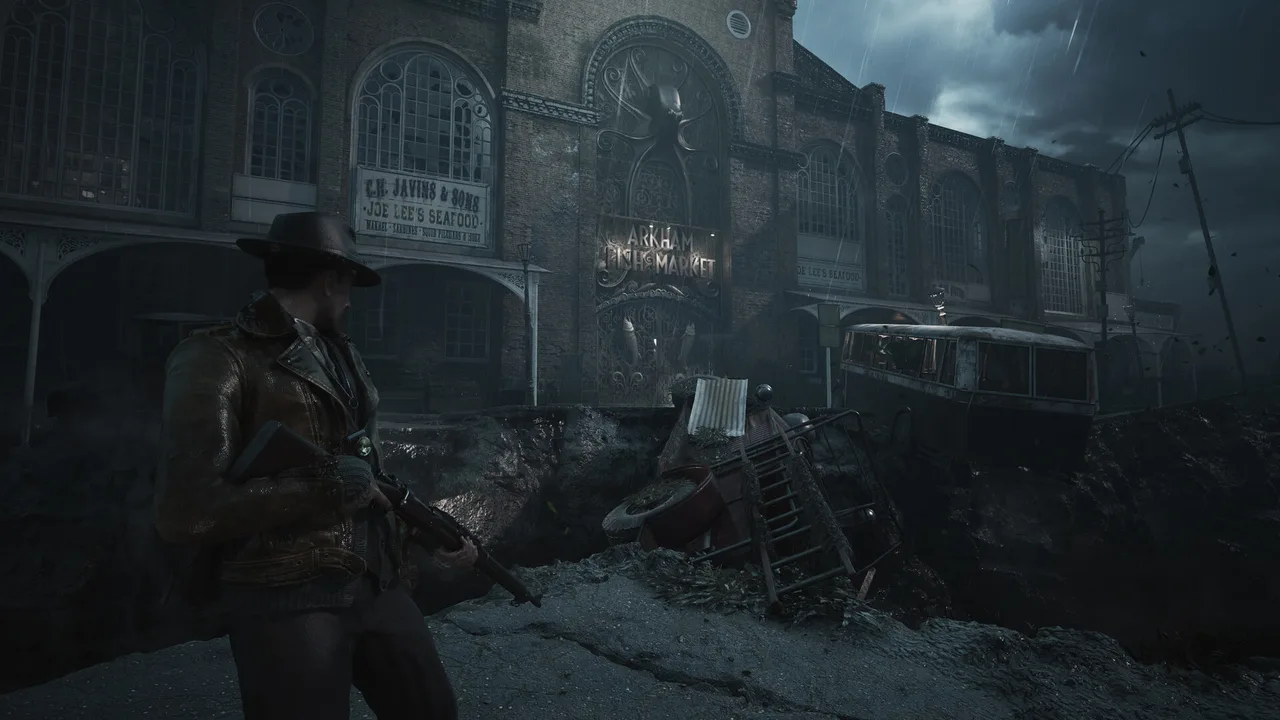
The release of The Sinking City 2 on August 18, 2026, marked a definitive turning point for developer Frogwares. Leaving behind the action-investigation hybrid model of the original 2019 title, the studio firmly planted its flag in the grueling soil of the pure survival horror genre. Powered by Unreal Engine 5, the decaying, flooded streets of Arkham offer an atmosphere thick with cosmic dread and immense graphical intensity. However, rendering a dynamically flooded city teeming with Lovecraftian horrors requires extraordinary computational power. While much of the pre-launch and launch-window discussion focused on Nvidia’s DLSS technology, a new community report indicates that AMD users might soon receive a massive technical lifeline in the murky depths.
According to a recently compiled tracking list on the Radeon subreddit, The Sinking City 2 is slated to support AMD’s cutting-edge FSR 4 technology, codenamed “Redstone.” If this community-sourced data holds true, it represents a substantial technical boon for PC players attempting to navigate the drowned city on AMD hardware, bringing machine-learning-driven performance boosts to a game that notoriously pushes modern rigs to their limits.
The Anatomy of FSR 4 “Redstone”
To understand why this unconfirmed inclusion is highly relevant to The Sinking City 2, we must examine what the FSR Redstone suite actually entails. The community report outlines three core pillars of this new technology. First is the Machine Learning FSR Upscaling 4.1.1, designed primarily for RDNA3 architecture and above. Unlike previous iterations that relied on standard analytical upscaling, this new version renders a lower-resolution frame and utilizes trained machine learning algorithms to reconstruct it at a higher resolution. For a visually dense game featuring volumetric fog, relentless rain, and intricate gothic architecture, ML upscaling can theoretically preserve finer details—like the rotting wood of your rowboat or the glistening scales of eldritch monstrosities—without the crushing performance tax of native 4K rendering.
The second component is FSR Frame Generation 4.0.1, aimed at RDNA4 architecture and above. This uses machine learning for frame interpolation, predicting and inserting entirely new frames between rendered ones. The community report notes this provides a dramatic uplift in perceived smoothness, albeit at the expense of some minor image accuracy. In the context of a slow-paced survival horror title where camera movements are deliberate and twitch-reflex aiming is de-emphasized, the trade-off of slight artifacting for a significantly higher and more stable framerate is usually a highly favorable exchange.
Perhaps the most critical rumored feature for The Sinking City 2 is FSR Ray Regeneration 1.2. Described as a neural network denoiser, it restores the quality of ray-traced details from areas with poor or low amounts of data, a feature that feels practically tailor-made for Frogwares’ vision of Arkham.
Ray Regeneration in a Drowned Arkham
Unreal Engine 5’s Lumen lighting system is spectacular, but it heavily relies on hardware capabilities to resolve complex lighting bounces. The setting of The Sinking City 2—a half-submerged, decaying metropolis—is effectively a worst-case scenario for standard rendering techniques. Almost every surface in the outdoor environments is wet, highly reflective, and in constant motion. When you are navigating the flooded streets by boat, the dark water acts as a massive, dynamic mirror reflecting the scarce light sources available in the environment.
Without advanced denoising, ray-traced reflections on undulating water surfaces in low-light environments often appear distinctly grainy, noisy, or unstable. FSR Ray Regeneration 1.2 could completely resolve this issue, ensuring that the eerie, bioluminescent glow of the Deep Ones lurking just beneath the surface is rendered with terrifying clarity. Imagine shining your boat’s searchlight into a pitch-black alleyway; the neural network denoiser would ensure the light bouncing off the submerged brickwork and rippling water looks natural rather than a mess of pixelated noise.
This level of uncompromising atmospheric fidelity is exactly what Frogwares aimed for when they initially crowdfunded the project via Kickstarter. The studio promised that the financial backing would allow them to build a fully realized, visually uncompromising vision of a flooded Lovecraftian hellscape where the environment itself acts as a hostile entity. The dense fog, the shifting tides, and the crumbling architecture of the drowned city require immense processing power, which perfectly explains why the baseline system requirements for this sequel are significantly higher than any of the studio’s previous outings.
Smooth Frames Cannot Save You: The Deliberate Pacing of Survival Horror
However, there is a distinct irony in the PC community’s relentless pursuit of high framerates for The Sinking City 2. While technologies like FSR 4 Redstone ensure the game runs smoothly and looks pristine, the gameplay itself is intentionally designed to feel desperate, sluggish, and unforgiving. The framerate on your monitor might be fast, but your investigator is absolutely not.
This strict design philosophy has proven somewhat polarizing for players expecting a traditional, fluid shooter experience. Recent discussions on general gaming forums have highlighted this exact friction. One player, seeking advice on accessible shooters on Reddit, cited their brief and highly frustrating time with The Sinking City 2, specifically criticizing the “old weapons, their reload time, and the little distance in relation to enemies.”
This critique, while intended as a negative, perfectly encapsulates the exact survival horror mandate Frogwares set out to achieve. The 1920s arsenal you wield is not meant to empower you. When you are cornered by the Slither in the claustrophobic, rotting corridors of the submerged hospital, the agonizingly slow animation of reloading your revolver—bullet by individual bullet—is entirely by design. The lack of distance, the oppressive feeling that enemies are constantly encroaching on your personal space faster than you can back away, is a calculated mechanic designed to induce panic and drain your character’s sanity.
For context, the 2019 iteration of The Sinking City often leaned heavily into pulp action. Charles Reed could amass significant stockpiles of ammunition, and enemy encounters, while startling, eventually devolved into manageable shooting galleries. The sequel violently course-corrects this. The heavy recoil of the double-barreled shotgun throws off your aim, the bolt-action hunting rifle requires precious seconds between shots, and the rudimentary firearms take painfully long to reload. This is a game where missing a single shot can lead to a rapid, gruesome death.
Having a perfectly smooth 60 or 120 frames per second courtesy of FSR Frame Generation will make the animation of your impending doom look incredibly fluid, but it will not speed up those reload times. It will not grant your character a generous dodge-roll with invincibility frames. The game demands methodical resource management, stealth, and a deep, practiced understanding of combat and weak points. You must make every single shot count because you simply do not have the time, the space, or the ammunition to spray and pray.
Bridging Technology and Terror
The intersection of cutting-edge rendering technology and retro, punishing game design is what makes The Sinking City 2 a fascinating case study in modern horror. If the community reports regarding FSR 4 Redstone support are accurate, AMD users will soon have incredibly powerful tools at their disposal to mitigate the heavy hardware demands of Unreal Engine 5. The machine learning upscaling and ray regeneration will undoubtedly enhance the grim beauty of the drowned city, allowing the cosmic horror to shine through without the immersion-breaking distraction of performance hiccups or visual noise.
Yet, Frogwares has masterfully ensured that technological comfort does not translate to in-game safety. The true horror stems from mechanical vulnerability, and no amount of AI-generated frames can protect your character from the physical and mental toll of Arkham’s depths. The relentless sanity system, the painfully scarce medical supplies, and the deliberately cumbersome firearms remain the true antagonists of the experience.
As of now, neither AMD nor Frogwares has officially confirmed the implementation of FSR 4 Redstone in upcoming patches for the game. However, given the title’s heavy reliance on advanced Unreal Engine 5 features and its status as a benchmark for next-generation survival horror, its inclusion on the community’s supported list feels highly plausible. Players currently fighting for survival in the flooded ruins can only hope that these technical reinforcements arrive soon, even if the horrors waiting in the dark remain just as deadly as before.