The Sinking City 2 Lore Mysteries: Yog-Sothoth, Mi-Go, and Unanswered Questions
Examine the biggest unresolved story mysteries in The Sinking City 2, featuring community theories on Yog-Sothoth, Mi-Go brain cylinders, and the Slither.
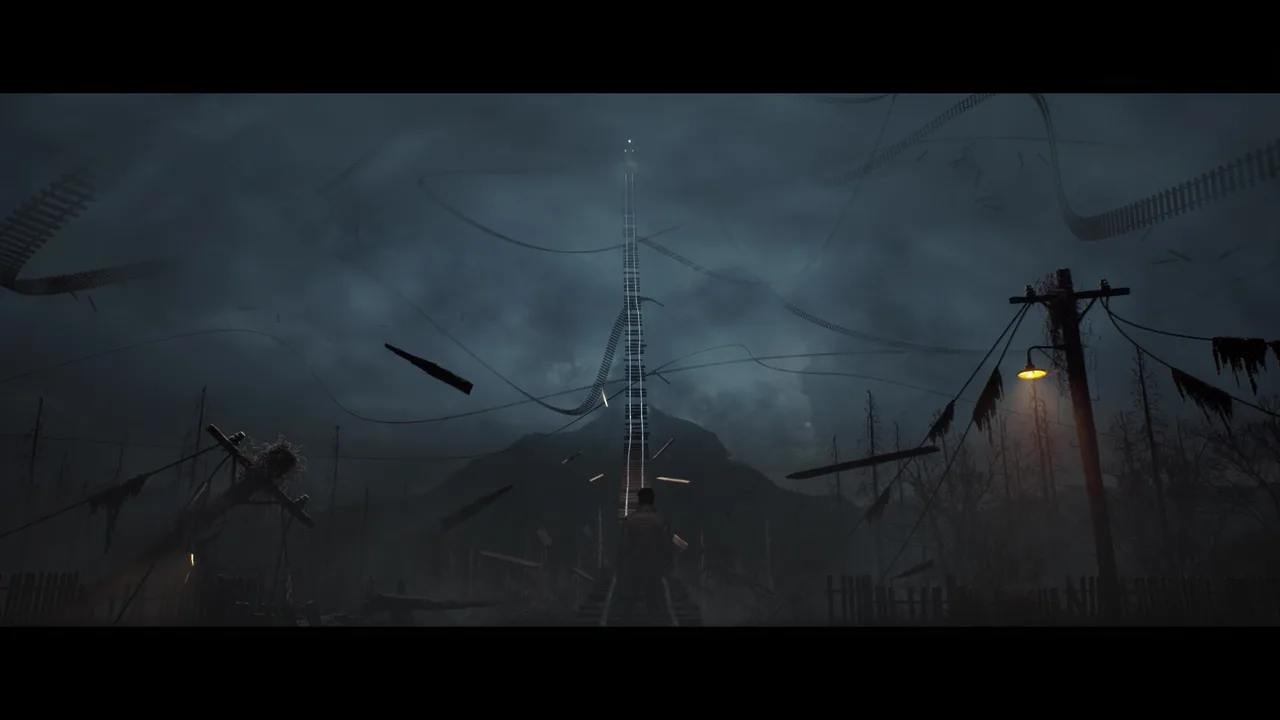
Frogwares successfully pivoted to pure survival horror with the release of The Sinking City 2 on August 18. By leaving behind the open-world detective focus of the original 2019 game and embracing the oppressive, claustrophobic streets of a drowned Arkham, the developers created an environment where storytelling happens largely through atmospheric dread and fragmented, often unreliable clues. With the game now in the hands of the community for a few weeks, many hardcore players have survived the flooded city, carefully managed their scarce ammunition, and reached the credits.
Naturally, reaching the end of a Lovecraftian narrative often raises far more questions than it answers. While the central conflict involving Calvin Rafferty’s search for Faye reaches a climactic peak, the background machinery of the cosmic horror remains shrouded in profound mystery. Across forums and community boards, dedicated investigators are pooling their notes to decipher the lingering mysteries of the storyline. The narrative ambiguity is fully intentional, forcing players to piece together environmental storytelling, hastily scribbled letters, and terrifying late-game revelations.
This article examines some of the most hotly debated, unresolved story elements currently circulating within the player base. We are looking specifically at community-reported theories regarding the motivations of Outer Gods like Yog-Sothoth, the sinister medical experiments of the Mi-Go, and the confusing territorial disputes between different enemy factions.
Warning: This article contains massive story and ending spoilers for the base game of The Sinking City 2.
The True Identity of “The Star”: Shub-Niggurath in Disguise?
During the harrowing final acts of the campaign, players are repeatedly confronted with cryptic references to an entity known only as “The Star.” The game deliberately obscures whether this is a literal celestial body in the corrupted sky above Arkham, a metaphor for an impending apocalyptic event, or a physical, fleshy entity manifesting within the flooded ruins. Community lore hunters have heavily debated the true nature of this being, with a prominent theory suggesting that The Star is actually an avatar or direct manifestation of Shub-Niggurath, the Black Goat of the Woods with a Thousand Young.
This theory stems from the thematic similarities between the organic, twisted growth seen in certain flooded districts and the traditional Lovecraftian depictions of Shub-Niggurath’s corrupted fertility. In the first game, players encountered the Fecund Mother, a distinct entity tied to grotesque birth and mutation. Fans are currently speculating whether The Star serves a parallel purpose in this survival horror sequel, acting as a central source of the biological anomalies plaguing the city. The Unreal Engine 5 graphics pipeline allows Frogwares to render these pulsating environmental hazards with sickening realism, making the presence of such an entity physically felt even when off-screen. If The Star is indeed Shub-Niggurath, it heavily implies that the current state of Arkham is not just a localized flood, but the beginning of a global, terrifying terraforming effort by the Outer Gods. However, this remains a community-reported theory, as the developer has not yet confirmed the exact pantheon hierarchy operating behind the scenes.
The Shadow in the Hospital: Mi-Go Experiments or Dreamlands Anomaly?
The medical facilities in survival horror games are historically the sites of the most intense psychological trauma, and The Sinking City 2 leans heavily into this trope. When navigating the Hospital Grounds, players encounter a deeply unsettling phenomenon referred to simply as the “Shadow.” Unlike standard physical enemies that can be eventually put down with a shotgun or a revolver, the Shadow operates on the periphery of Calvin’s vision, tied closely to the fluctuating sanity and mind mechanics.
The community is sharply divided on what the Shadow actually represents in the lore. One prevailing theory suggests that the Shadow is a visual distortion caused by the presence of a Mi-Go, the extraterrestrial fungoid species famous in Lovecraft lore for harvesting human brains and conducting horrific surgical procedures. The hospital setting perfectly aligns with the Mi-Go’s cold, calculated medical experiments. Players have found scattered surgical equipment and bizarre organic machinery that clearly do not match human medical science of the 1920s era, heavily suggesting extraterrestrial interference.
Alternatively, another subset of the community suspects the Shadow might be a straggler from the Dreamlands. As Calvin’s mental state rapidly deteriorates due to the horrors he witnesses, the boundary between physical reality and the Dreamlands thins, potentially allowing nightmare creatures to bleed into the waking world of Arkham. Because the game actively penalizes low sanity with intense visual and auditory hallucinations, distinguishing between a physical Mi-Go threat and a psychological Dreamlands anomaly becomes a core challenge for the player. The true nature of the Shadow is not yet confirmed by the game’s codex, leaving it as one of the most terrifying unresolved elements of the hospital chapter.
The Tragic Timeline of Corentin and the Brain Cylinders
One of the more poignant side narratives involves a character named Corentin, whose ultimate fate has sparked intense timeline analysis among fans. According to community-reported details found in the “Ex Oblivione” lore text—a clear homage to Lovecraft’s short story of the same name—Corentin purportedly turns into a mindless, shambling zombie after attempting to evacuate the flooded city and failing to secure fresh bodies for his desperate survival plan.
However, eagle-eyed players have discovered a conflicting piece of evidence that turns this tragic tale into a complex, horrific mystery. Corentin’s name seemingly appears on a hidden ledger detailing victims whose brains were systematically harvested by the Mi-Go and placed into metallic extraction cylinders. This revelation creates a fascinating chronological paradox. Did the Mi-Go surgically remove Corentin’s brain long before Calvin even arrived in Arkham? If so, does that mean the version of Corentin mentioned in the evacuation logs was already an empty husk, operating purely on residual, corrupted instinct?
This ambiguity perfectly encapsulates the bleak tone of the sequel. The idea that a character’s consciousness might be trapped in a metal cylinder in total darkness while their body wanders the flooded streets as a zombie is a quintessential cosmic horror trope. It also fundamentally changes how players perceive the few survivors they encounter. The game rarely hands you a definitive timeline, forcing the community to map out these chaotic events manually and debate which lore documents are reliable.
Ma Fishface and the Marsh Gang’s True Allegiance
Stepping away from the cosmic deities, the human element of Arkham presents its own set of compelling mysteries. Navigating the ruined city often brings players into conflict with a heavily armed criminal syndicate known as the Joe Marsh gang. The surname “Marsh” is an immediate red flag for any Lovecraft fan, acting as a direct link to the Deep Ones and the cursed lineage of Innsmouth. The gang controls significant portions of the remaining resources, making them a tangible, heavily armed threat in a game where every bullet and medical kit is absolutely vital.
Among the ranks of this syndicate is a character the community has dubbed “Ma Fishface.” Her presence in the gang’s primary base of operations has raised several eyebrows. Was she an active matriarch in the criminal enterprise, fully complicit in whatever dark pacts the Marsh gang had formed with the entities beneath the water? Or was she a captive, perhaps a tragic figure caught in the crossfire of the gang’s aquatic ambitions?
The game provides subtle environmental clues suggesting she held a position of authority, but her exact knowledge of the eldritch reality surrounding them remains entirely unclear. Understanding the hierarchy of the Marsh gang is crucial for lore enthusiasts trying to map out how human factions survived the initial deluge. Did they survive because they were well-armed and prepared, or because they struck a vile bargain with the Deep Ones?
Contradictory Cosmic Motives: Yog-Sothoth and The Slither
Perhaps the most massive unresolved question discussed within the community revolves around the overarching goals of the Great Old Ones, specifically concerning Yog-Sothoth and Calvin Rafferty’s role in the cosmic design. The late-game narrative heavily implies that Yog-Sothoth required Calvin and Faye to act as living catalysts. Specifically, their presence and actions were supposedly needed to charge the enigmatic “Eyes” and fully open a dimensional portal, allowing Yog-Sothoth to cross over into our reality and consume Arkham completely.
If Calvin is a strictly necessary pawn for this apocalyptic ritual, a massive contradiction arises when examining enemy behavior. Throughout the campaign, Calvin is relentlessly hunted by various eldritch horrors and bosses, most notably the Slither. The Slither are some of the most aggressive, fast, and lethal enemies in the entire game, demonstrating a clear, single-minded objective to terminate the protagonist on sight.
Why would the monstrous foot soldiers of the flooded city try to kill the very person required to complete the grand ritual? The community has proposed several fascinating theories to explain this discrepancy. One expected explanation is that the Outer Gods are simply not a unified front. The creatures hunting Calvin might serve a rival entity—perhaps Cthulhu or Nyarlathotep—who actively wishes to prevent Yog-Sothoth from manifesting and claiming Arkham for itself.
Another theory posits that the Slither are essentially mindless. They might just be territorial predators that emerged from the deep floodwaters, operating purely on base instinct and entirely unaware of the grand cosmic chess match taking place above them. Finally, some fans speculate that the monsters are trying to prevent Calvin from reaching Faye’s body, believing that the ritual can be expedited or violently hijacked without his specific, meddling interference. This lack of a unified enemy motive adds a brilliant layer of chaotic realism to the Lovecraftian setting; humanity is merely caught in the crossfire of incomprehensible beings who might be actively warring against one another.
Frogwares has crafted a deeply layered narrative that rewards careful exploration and obsessive reading of scattered documents. The shift to a pure survival horror format means players are often too busy managing their health and ammunition to notice the subtle lore implications on their first playthrough. It is only now, as the community meticulously dissects the endgame, that these massive lingering questions regarding the Mi-Go, Shub-Niggurath, and Yog-Sothoth are coming to light. Whether these mysteries will be addressed in future DLC cases or left intentionally ambiguous remains to be seen. For now, the drowned city of Arkham continues to hold tightly onto its darkest secrets.