The Hospital Grounds
Where the Sick Were Kept
The Hospital Grounds in The Sinking City 2 — an asylum-adjacent zone of medical horror, flooded wards, and things that should have stayed sedated.
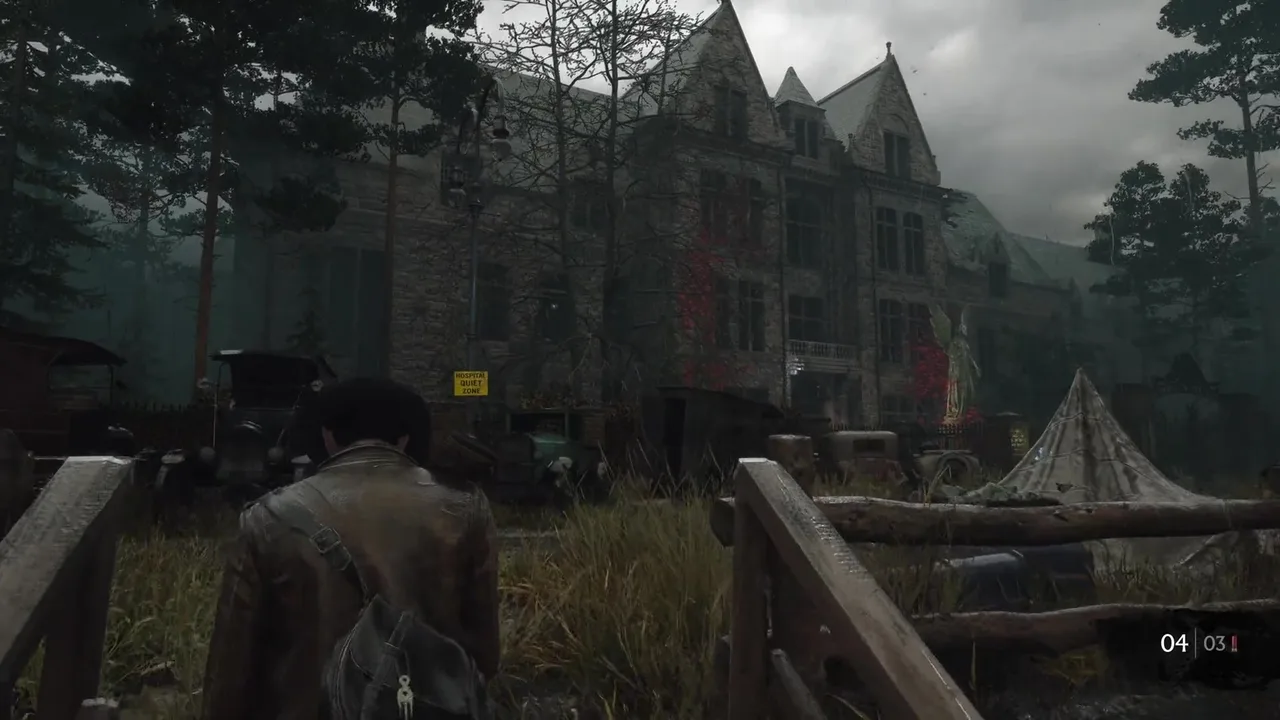
The quarantine signs are still up. The quarantine failed.
Arkham had a hospital. Every New England town of any size did in the 1920s, a brick pile with too few beds and a staff that ran on coffee and obligation. But Arkham also had the other kind of medical facility — the kind with barred windows and a wing they didn’t put on the brochure. The Hospital Grounds encompass both, and the flood turned the whole complex into something that feels less like a place of healing and more like a throat that swallowed its patients whole.
Draped shapes on gurneys. Restraints still buckled to bed frames. And the water, always the water, filling the lower wards like bile.
The Complex
The Hospital Grounds sit in Arkham’s institutional belt — that zone between the commercial core and the residential neighborhoods where cities put the buildings they needed but didn’t want to look at. A main hospital building, several stories of red brick with the kind of utilitarian architecture that says “public health” and means “underfunded.” Connected by covered walkways to an older, grimmer structure that’s almost certainly the asylum or sanitarium wing.
Outbuildings round out the complex: a laundry, a generator house, what might be a morgue or pathology lab set slightly apart from the main cluster. The grounds themselves — lawns, paths, a small courtyard — are flooded to varying depths, creating a campus you’d need to wade or boat across to traverse.
The main hospital’s ground floor and basement levels are submerged. Upper floors are accessible but compromised — ceilings leak, floors sag, entire sections have collapsed where the water undermined the foundations. The asylum wing is partially intact but sealed. Locked doors. Quarantine signage. The kind of barriers that make you wonder whether they were keeping something in or keeping you out, and the answer is probably both.
Medical Horror, Arkham Style
Lovecraft’s Arkham has always had an uncomfortable relationship with its institutions. Miskatonic University’s faculty dabbled in things they shouldn’t. The churches harbored cults. The hospital — in a Lovecraftian reading — would be where the city tried to contain the symptoms of its spiritual sickness and failed.
The Sinking City 2 is expected to lean into this hard. Asylum records from before the flood — patient intake forms, treatment logs, incident reports — likely document cases of madness that weren’t madness at all. Patients who described the flood before it happened. Patients who drew things in the water. Patients who changed, physically, in ways the staff couldn’t explain and the records trail off before finishing.
These documents are the investigation system’s bread and butter in this district. Where the Residential Flats give you personal diaries, the Hospital Grounds give you clinical observations — colder, more detailed, more horrifying for their detachment. “Patient exhibits advanced ichthyoid scaling on the lower extremities” tells you something a diary entry never would.
What’s Still Inside
Medical supplies. That’s the pragmatic reason to come here, and it’s a compelling one. Arkham’s resource scarcity makes the Hospital Grounds one of the most valuable scavenging targets in the game. Bandages, painkillers, antiseptic, possibly surgical tools that serve as crafting components. The pharmacy, if you can reach it, could be a jackpot.
But every supply cache here comes with a cost. The pharmacy is probably in the flooded basement. The good medical supplies are in the locked ward. The best equipment is in whatever room they sealed off and covered with warning signs.
The draped shapes are the obvious question. That promotional screenshot — the brick interior, the covered form, the protagonist investigating — could be anything. A body. Something that used to be a body. Something still moving under the sheet. The Hospital Grounds are expected to play heavily on the horror of medical environments: things that should be dead and aren’t, restraints that failed, treatments that went sideways in Lovecraftian directions.
Flooded basement wards are likely the district’s most intense spaces. Slithers down there could be former patients — still in hospital gowns, still wearing identification bracelets, still buckled to wheeled beds. The Slithers are horrifying enough in generic environments. Put them in a context that reminds you they were people, in a place that was supposed to help them, and the horror compounds.
The Sealed Wing
The asylum section deserves its own mention because it’s likely the district’s centerpiece. Lovecraftian fiction loves its asylums — Arkham Sanitarium is a staple of the Cthulhu Mythos tabletop RPG, and Frogwares would be leaving money on the table not to include a version of it.
Expect a locked-down wing with its own internal logic. Wards organized by severity. Isolation rooms. A records office with patient files that piece together something larger. The deeper you go, the worse it gets — both in terms of what you find and what finds you.
A boss encounter here wouldn’t surprise anyone. Something that was a patient once, something the staff tried to contain, something the flood let out. The confined spaces of an asylum ward — long corridors with rooms on both sides, limited sightlines, doors that could open at any time — are perfect for a high-tension set piece.
Hazards Beyond the Creatures
Chemical spills are a real concern. A flooded hospital means medications, reagents, and disinfectants leaking into the water. Gas leaks from damaged utility lines in the generator house. These environmental hazards may create zones you can’t linger in without taking damage, forcing you to plan routes carefully.
Structural integrity is worse here than in most districts. Hospitals have heavy equipment — MRI machines didn’t exist in the 1920s, but X-ray equipment did, along with autoclaves, surgical lamps, and iron bed frames. All of that weight, sitting on waterlogged floors, creates collapse risks. A floor that held under normal conditions might fail when you add your weight to a room full of waterlogged medical equipment.
Why You’d Come
For the supplies, first and foremost. The Hospital Grounds are expected to be the game’s primary medical loot zone, and in a survival horror with scarce resources, that alone justifies the risk.
For the lore. The asylum records could be some of the game’s most important investigation material — clinical documentation of exactly what was happening to Arkham’s citizens before the flood, written by people trained to observe and record. Understanding the flood might require understanding the patients first.
And for the dread. The Hospital Grounds are where The Sinking City 2 marries two horror traditions — Lovecraftian cosmic horror and institutional medical horror — and the combination, based on what Frogwares has shown, looks like it’ll be one of the game’s most memorable environments. Some places are frightening because of what’s in them. The Hospital Grounds are frightening because of what they were.