The Stalkers
Feral Pursuer
The Stalkers are fast, aggressive elite enemies in The Sinking City 2 that close distance violently. Tactics, weak points, and encounter tips.
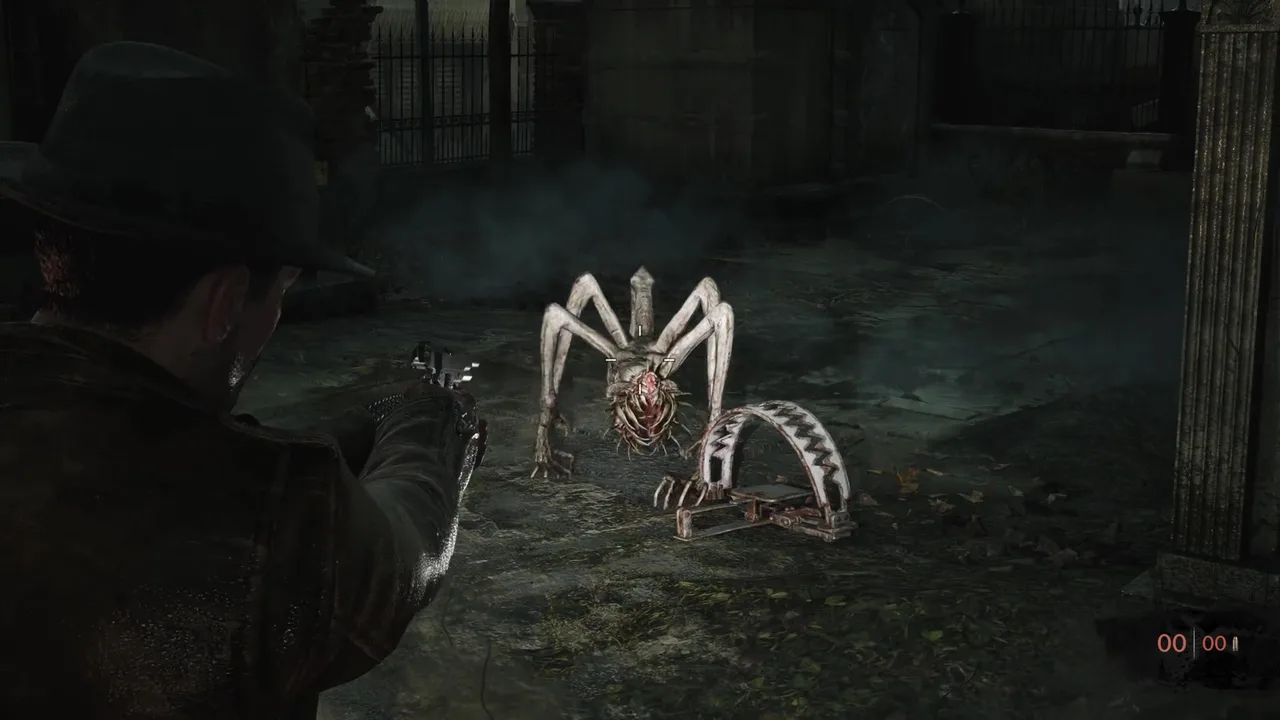
You don't hear them. You just feel something wrong, and then they're already on top of you.
Preview coverage of The Sinking City 2 has repeatedly mentioned a fast, aggressive creature type that “violently closes distance” — something small, feral, and terrifying in a way that the shambling Drowned and lurching Slithers are not. We’re calling them the Stalkers, and while Frogwares hasn’t dropped an official name yet, this archetype is clearly in the game. The spectral, luminous figures visible in screenshots suggest something that hunts very differently from TSC2’s other threats.
They’re the enemy that punishes you for standing still.
Lore
Where the Drowned and the Slither are products of death — corpses given terrible new purpose — the Stalkers seem to be something else entirely. Based on the visual language of preview screenshots, they have an eerie bioluminescent quality, glowing faintly in the dark like deep-sea creatures dragged onto land. They’re smaller than human-sized, hunched and quadrupedal or semi-quadrupedal, built for speed rather than brute force.
The going theory is that they’re creatures native to whatever dimension or depth the flood connects Arkham to — not reanimated humans, but something other that slipped through when the water rose. Lovecraft’s fiction is full of entities that exist at the edges of human perception, things that scuttle in the dark between worlds. The Stalkers fit that niche.
Their pack behavior reinforces this. They’re not solitary predators; they coordinate. One draws your attention while others flank. This isn’t the mindless aggression of a reanimated corpse — it’s hunting intelligence, something closer to a wolf pack than a zombie horde.
The name “Stalker” comes from what they do before they attack: they follow. Players in preview sessions have described the sensation of being watched, of catching a flicker of movement on a rooftop or in a window, before the actual attack begins. They test you before they commit.
Behaviour
Speed is their defining trait, and it changes the combat dynamic completely.
Against Drowned or Slithers, you have time. You can assess the room, identify threats, plan your approach. Stalkers don’t give you that luxury. They close a twenty-meter gap in seconds. One moment they’re across the street, the next they’re in your face, clawing and biting.
They attack in coordinated bursts. A group of Stalkers doesn’t charge all at once — they stagger their approaches, hitting you from different angles in rapid succession. You deal with one, spin to face another, and a third is already flanking. The staggered attack pattern is designed to keep you reactive, never proactive.
Their movement is erratic and low to the ground. They dodge laterally, change direction mid-sprint, and can climb walls and rubble to approach from unexpected angles. Tracking them with a gun sight is genuinely difficult, especially in the dark.
Before they charge, there’s supposedly a brief audio cue — a rapid clicking or chittering sound, like insect mandibles. Learn that sound. It’s the only warning you get.
They seem to prefer open or semi-open spaces: wide streets, courtyards, rooftops, the upper floors of ruined buildings where the walls have collapsed. Tight corridors actually work in your favor against Stalkers, because it limits their ability to flank and forces them into a line.
How to fight it
Everything about the Stalker’s design pushes you toward close-range weapons. They’re going to be in your face regardless of what you do, so lean into it.
The shotgun is your best friend here. A Stalker closing distance at full speed is basically delivering itself to shotgun range. Wait for it to commit to its charge — there’s a brief moment where it locks onto a straight-line path — and fire. At close range, a shotgun blast should stagger or kill outright.
Their weak point appears to be an exposed cavity in the chest or underbelly — a gap in whatever passes for their hide that reveals the luminous tissue underneath. It’s a harder shot than the Slither’s tendril or the Drowned’s head, because you’re trying to hit a moving target’s underside while it’s sprinting at you. But the damage multiplier makes it worth attempting.
The flashlight and flares serve a tactical purpose beyond illumination. Bright, direct light seems to stagger Stalkers momentarily — not a full stun, but enough to break their charge and give you a window to line up a shot. If you know Stalkers are in the area, having a flare ready to throw at your feet can create a safe zone of sorts.
Don’t try to snipe them from a distance. Their erratic movement makes long-range shots wasteful. Let them come to you, use the environment to limit their approach angles, and punish them at close range.
Melee is risky but not impossible. A well-timed dodge followed by a heavy melee strike can catch a Stalker mid-lunge. But the timing window is tight, and if you miss, you’re eating a full combo of claw swipes. Only go melee if you’re genuinely out of shells.
In mixed encounters — Stalkers plus Drowned or Slithers — prioritize the Stalkers. Every single time. The slow enemies can wait; the fast ones will kill you while you’re dealing with the slow ones.
Where you’ll meet it
Stalkers favor the darker, more exposed parts of Arkham. Night-time encounters in the streets are their signature arena — wide enough for flanking, dark enough for them to use their speed advantage. The residential districts with their collapsed upper floors and exposed rooftops are natural Stalker territory.
Expect them in the mid-game onward. The early hours of TSC2 will probably ease you in with Drowned and Slithers before introducing something fast enough to force you to rethink your combat approach entirely. Once they appear, they likely stay in the rotation for the rest of the game.
Rooftop sections and any elevated traversal are prime Stalker ambush points. If you’re climbing through the upper floors of a ruined building and the path opens up into a wide room with multiple entry points, brace yourself. That’s a Stalker arena, and they designed it that way.