The Sinking City 2 Chthonic Arsenal Evaluation, Ex Oblivione Lore & Trophy Strategies
Explore the community-reported Chthonic Arsenal in The Sinking City 2, deep dive into Ex Oblivione multiverse theories, and learn how to unlock key talents.
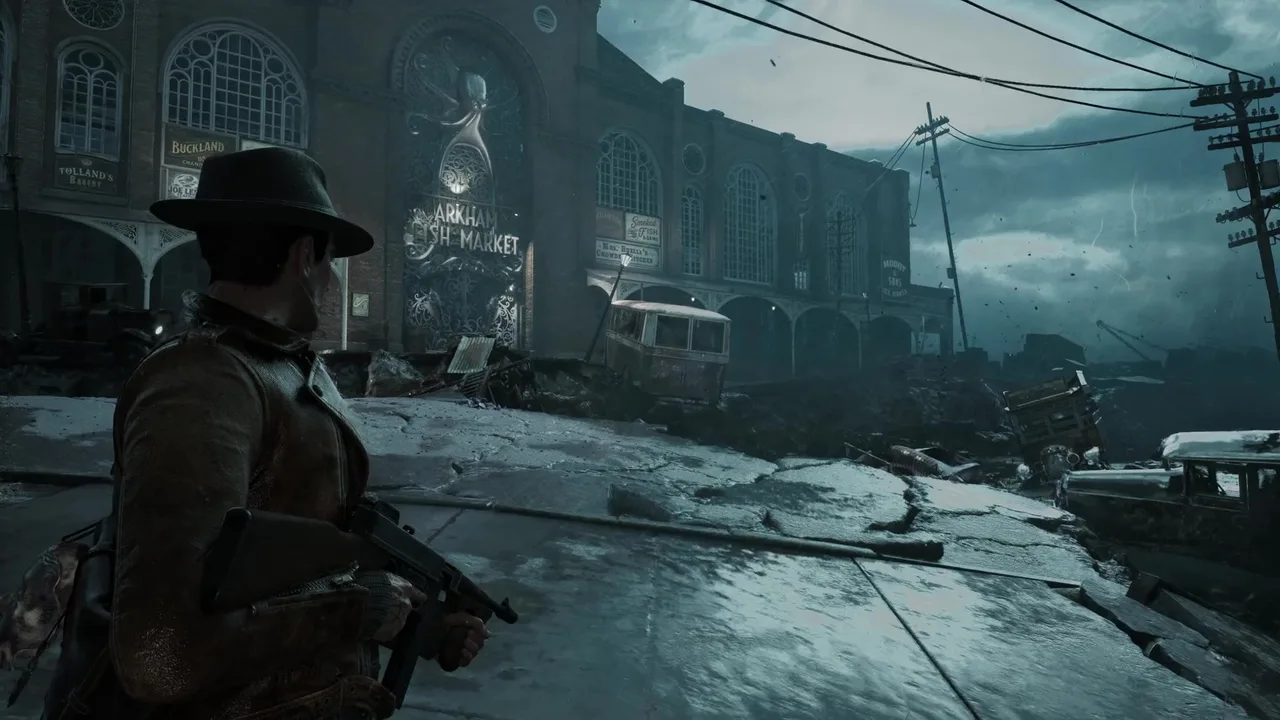
The shift from a detective-focused adventure to a pure, unforgiving survival horror experience has fundamentally changed how players approach the flooded streets of Frogwares’ latest title. Powered by Unreal Engine 5, the drowned city of Arkham presents a visually oppressive and psychologically taxing environment where resources are painfully scarce. Every encounter is designed to drain both your limited ammunition and your precious sanity. While the wider community is still busy mapping the treacherous waterways and dissecting the optimal ways to survive, recent online discussions have brought three specific topics to the absolute forefront of the community zeitgeist: the controversial balance of the Chthonic Arsenal, mind-bending player theories regarding the “Ex Oblivione” lore sequence, and the optimal path for achievement hunters stuck on cryptic progression milestones.
This article serves to break down these ongoing discussions, evaluate the reported mechanics, and provide a clear roadmap for players struggling against both the eldritch horrors and the game’s stringent resource economy.
The Chthonic Arsenal: Power vs. The Survival Horror Balance
A recent review by Gamecritix highlighted the “Chthonic Arsenal,” sparking an intense debate among the active player base regarding weapon balance. In a game that was explicitly built from the ground up to emphasize severe ammo scarcity, physical vulnerability, and the constant necessity of avoiding direct combat, the introduction of specialized or otherworldly weaponry always runs the inherent risk of disrupting the core tension of the experience. According to community reports and early player evaluations, the Chthonic Arsenal is expected to offer highly unique firing mechanics or alternative damage types that differ significantly from the standard 1920s firearms available in the base progression.
For survival horror traditionalists, relying strictly on standard ballistic weapons is arguably the purest way to experience the dread Frogwares intended. When you are gripping a rusted, base-level [hunting rifle](/arsenal/hunting-rifle/), every single bullet loaded into the chamber represents a deeply calculated risk. You are constantly forced to weigh the immediate cost of taking down a looming threat versus the potential, desperate need for those rounds in the next submerged building. If the currently rumored Chthonic Arsenal introduces weapons that utilize alternative resource pools—such as heavily draining your sanity for immense firepower or requiring rare, eldritch materials instead of standard brass cartridges—it has the potential to dramatically shift how players plan their scavenging routes.
However, players experimenting with this equipment have noted that wielding high-tier, otherworldly armaments might make certain encounters slightly more manageable, but it should never be viewed as a free pass. The enemies lurking in this drowned city, particularly the relentless aquatic horrors and the unpredictable Slither, are reportedly designed specifically to punish overly aggressive playstyles. Even with advanced armaments that deal heavy damage, standing your ground in an enclosed space is often a fatal mistake. The entire tension of the survival horror genre relies heavily on player vulnerability. If you choose to equip elements of the Chthonic Arsenal, it is highly recommended to still religiously apply the evasion, stealth, and spatial positioning tactics heavily outlined in our dedicated [combat guide](/guides/combat-guide/). Overconfidence in the flooded districts usually ends in a swift, brutal death, regardless of the exotic firepower you bring to the fight.
Ex Oblivione: Are We Trapped in a Cosmic Multiverse?
Beyond the mechanical debates regarding weapon balance, the game’s narrative community is currently obsessed with dissecting the cosmic lore, particularly the deeply unsettling sequence widely referred to by players as “Ex Oblivione.” A fascinating and rapidly growing thread initiated by Reddit user Mishere1300 has recently gained significant traction. This thread proposes a complex, overarching multiverse theory that directly connects the nightmarish events of this flooded Arkham to the protagonist of the 2019 original game, Charles Reed.
In the original 2019 title, Reed navigated the madness of Oakmont, Massachusetts. The new, community-reported theory suggests that the events of the sequel might actually be part of a larger, looping multiverse structure heavily influenced by the Outer God, Yog-Sothoth. According to this unconfirmed but highly compelling player hypothesis, the original protagonist might be observing the destruction of this new, distinct version of Arkham from entirely outside normal spacetime boundaries. The theory argues that Yog-Sothoth has not merely flooded the city with seawater, but has metaphysically isolated or even “deleted” Arkham from baseline reality, placing the entire region and its inhabitants in a recursive, inescapable nightmare state.
This interpretation perfectly aligns with classical Lovecraftian themes of human insignificance, cosmic indifference, and cyclical doom. The title “Ex Oblivione” itself is a direct reference to H.P. Lovecraft’s prose poem of the exact same name, which tells the story of a man desperately seeking escape from the waking world through the dreamlands, only to find a terrifying nothingness. If Frogwares is indeed weaving a narrative where the protagonist is fundamentally trapped in a multi-dimensional loop orchestrated by an incomprehensible Outer God, it adds immense psychological weight to every action taken in the game.
It is incredibly important to note that Frogwares has not officially confirmed these multiverse theories, and they remain entirely community-generated. The developer has kept the deepest lore secrets closely guarded, deliberately allowing the stunning environmental storytelling rendered in Unreal Engine 5 to do the heavy lifting. Whether this is a literal narrative continuation of Charles Reed’s fate or just a clever thematic nod to the original Oakmont incident remains a hotly debated topic on the forums. However, the sheer volume of hidden documents and cryptic environmental clues found rotting in the submerged churches suggests that the community’s lore hunters are definitely onto something significant.
Trophy Hunting: Decoding “What Dreams Are Made Of”
Transitioning from cosmic lore to gameplay completionism, the road to the platinum trophy has hit a massive roadblock for many dedicated players. Specifically, the “What Dreams Are Made Of” trophy is currently causing widespread confusion and frustration. A recent, highly upvoted query on the TrophyHunters_PSN subreddit highlighted the severe ambiguity of the achievement’s exact unlock conditions. Players are completely unsure if the achievement strictly requires maxing out every single individual node within the talent tree, or if it simply triggers upon reaching specific, late-game tier milestones.
Navigating the intricacies of [character progression](/systems/character-progression/) in a strict survival horror setting is an inherently difficult and often contradictory task. Unlike traditional action-oriented RPGs where you can easily and safely farm experience points by repeatedly clearing out low-level enemy camps, attempting to grind combat encounters here will completely deplete your medical supplies, ammunition, and crafting reserves long before you gain any meaningful XP. Every piece of experience gained through brute force combat comes at a severe, sometimes run-ending resource cost. If the trophy reportedly requires fully unlocking the entire expansive talent tree, players will need to meticulously and perfectly plan their character builds straight from the opening prologue.
Community consensus among early completionists currently heavily recommends focusing all initial points entirely on investigation, sanity preservation, and stealth talents. By maximizing the experience multipliers gained from discovering hidden lore documents and successfully avoiding combat encounters altogether, players can passively generate the massive amounts of XP needed for the later, exponentially more expensive combat talents. It is a razor-thin balancing act: risking fatal exposure to gather world-building documents versus staying hidden in the shadows to preserve your fragile sanity.
The Strategic Importance of Emergency Relief Crates
This delicate, often punishing resource economy brings us to the final, crucial piece of the survival puzzle: Emergency Relief Crates (ERCs). As highlighted by an extensive recent guide published by Hardcore Gamer, painstakingly mapping out the locations of these hidden crates is not just optional side content meant for completionists; it is arguably absolutely mandatory for surviving the brutal difficulty spikes in the latter half of the game.
These heavily guarded ERCs contain the absolute highest concentration of rare crafting materials, high-caliber ammunition, and potent sanity restoratives available in the game. When you are desperately trying to scrape together just enough resources to repair your weapons or afford the next critical talent point, these crates become your primary lifeline in the dark. The terrifying catch is that they are almost always located in the absolute most hostile, uninviting environments imaginable. Successfully reaching them often involves navigating your fragile boat through blindingly dense fog, docking at structurally compromised and sinking buildings, and silently slipping past large, roaming enemy patrols.
For those players who are still actively learning [how to fight Deep Ones](/guides/how-to-fight-deep-ones/) efficiently, attempting to secure a deep-water ERC can easily turn into a desperate, chaotic fight for sheer survival. The risk-reward ratio is incredibly steep and unforgiving. Without proper planning, you might easily expend significantly more ammunition clearing a safe path to the crate than the crate itself actually provides. Therefore, knowing exactly where they are—and meticulously planning a nautical route that minimizes your direct exposure to the flooded streets—is a vital skill that separates the survivors from the drowned.
The post-launch landscape of the game stands as a strong testament to Frogwares’ successful, uncompromising pivot to the survival horror genre. Whether the community is fiercely debating the long-term balance implications of the Chthonic Arsenal, unraveling the terrifying cosmic multiverse theories of Ex Oblivione, or mapping out the most resource-efficient route to a grueling platinum trophy, the flooded, rotting streets of Arkham continue to offer profound mysteries. As more players inevitably reach the endgame and uncover the remaining secrets, we expect these community theories and survival strategies to evolve even further. For now, keep your lanterns low, conserve every single piece of ammunition, and remember: never, ever trust the water.